
Steinway piano RESTORATION
STEINWAY PIANO RESTORATION
Guided by decades of Steinway experience
For Steinway owners, restoration isn’t only about making a piano look new. It’s about preserving what makes it a Steinway. Every decision matters — from materials to touch to tone — and there are no shortcuts.
Our work is guided by decades of hands-on Steinway experience, including direct employment by Steinway and factory training in New York City. We understand how these instruments are built, how they age, and how even small changes affect the way a Steinway responds and sounds. That understanding informs every recommendation we make.
Just as important as knowing what to change is knowing what not to. Our approach is careful, measured, and rooted in long-term performance rather than quick fixes.
below: Hamburg Steinway & Sons model B in sepele mahogany w/gold ormolu fully restored by Bradfield Piano in 2018. Scroll to 1:32 to see before and after
RESTORED STEINWAY PIANOS
SELECT IMAGES OF PIANOS RESTORED BY BRADFIELD PIANO
We’ve spent decades working hands-on with Steinway pianos — restoring, rebuilding, repairing, and refinishing instruments for musicians, collectors, and private owners who care deeply about how their piano plays and sounds. Our team is guided by former Steinway technician Holt Bradfield Deniger, who worked for Steinway for nearly a decade as a technician and rebuilder.
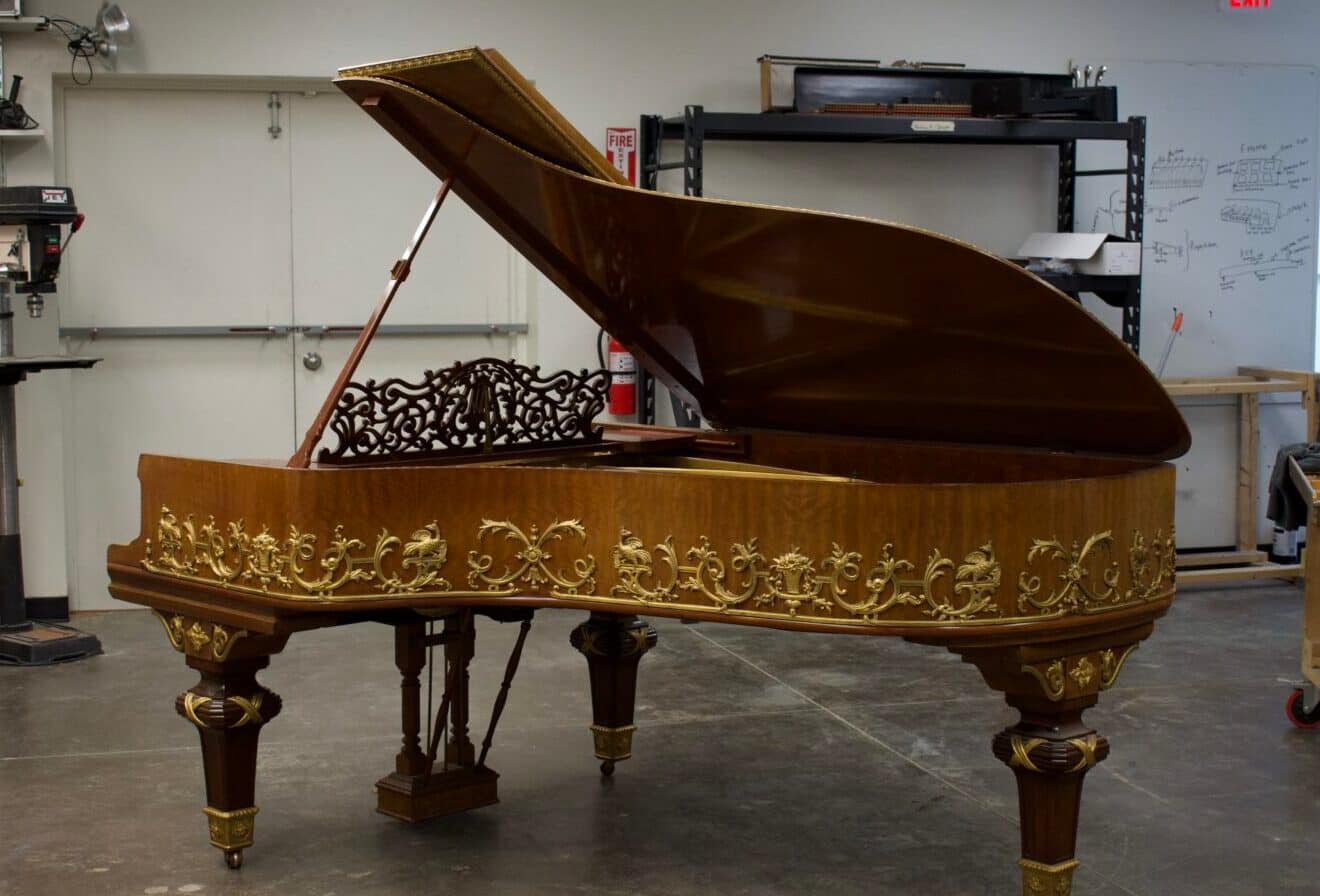
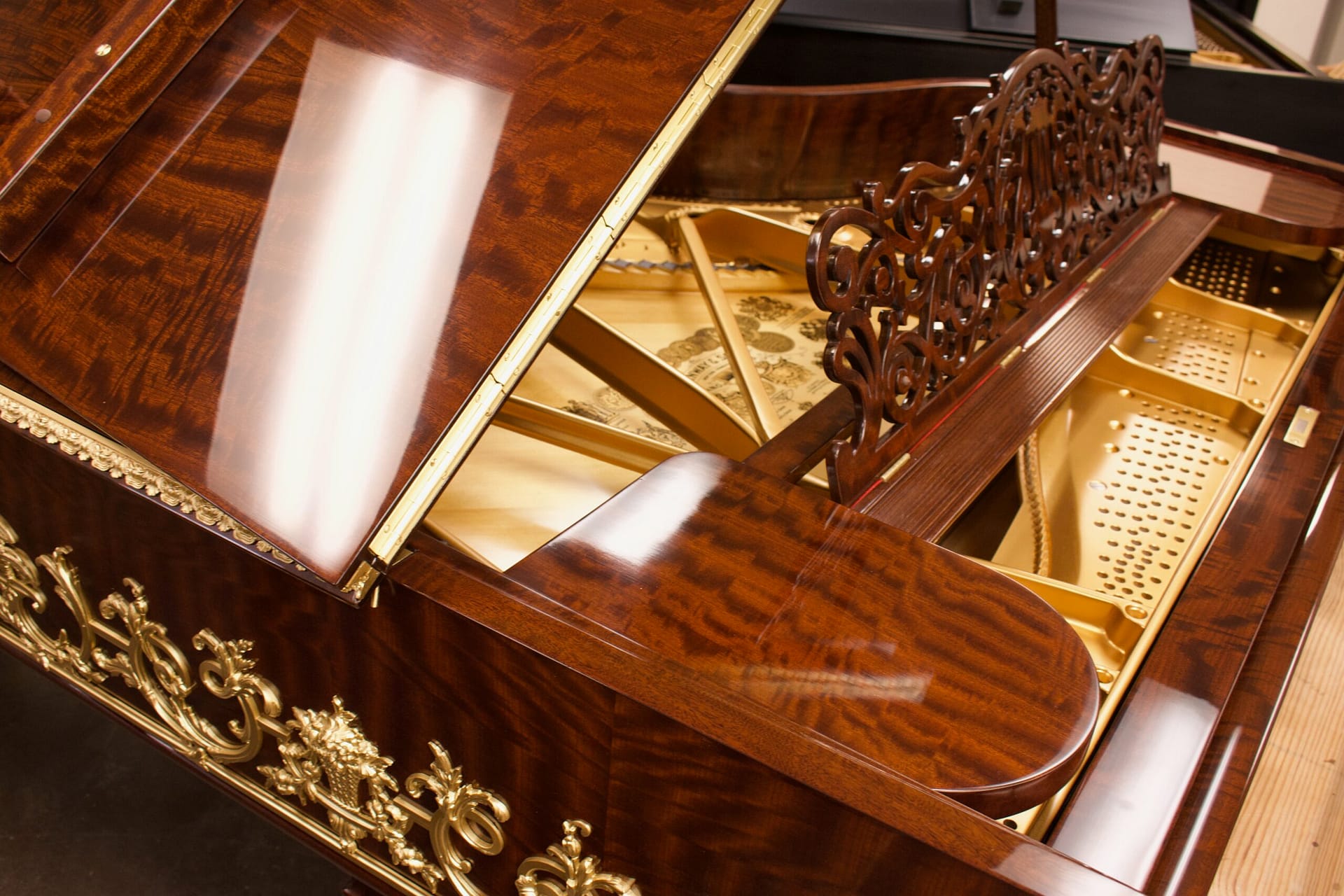
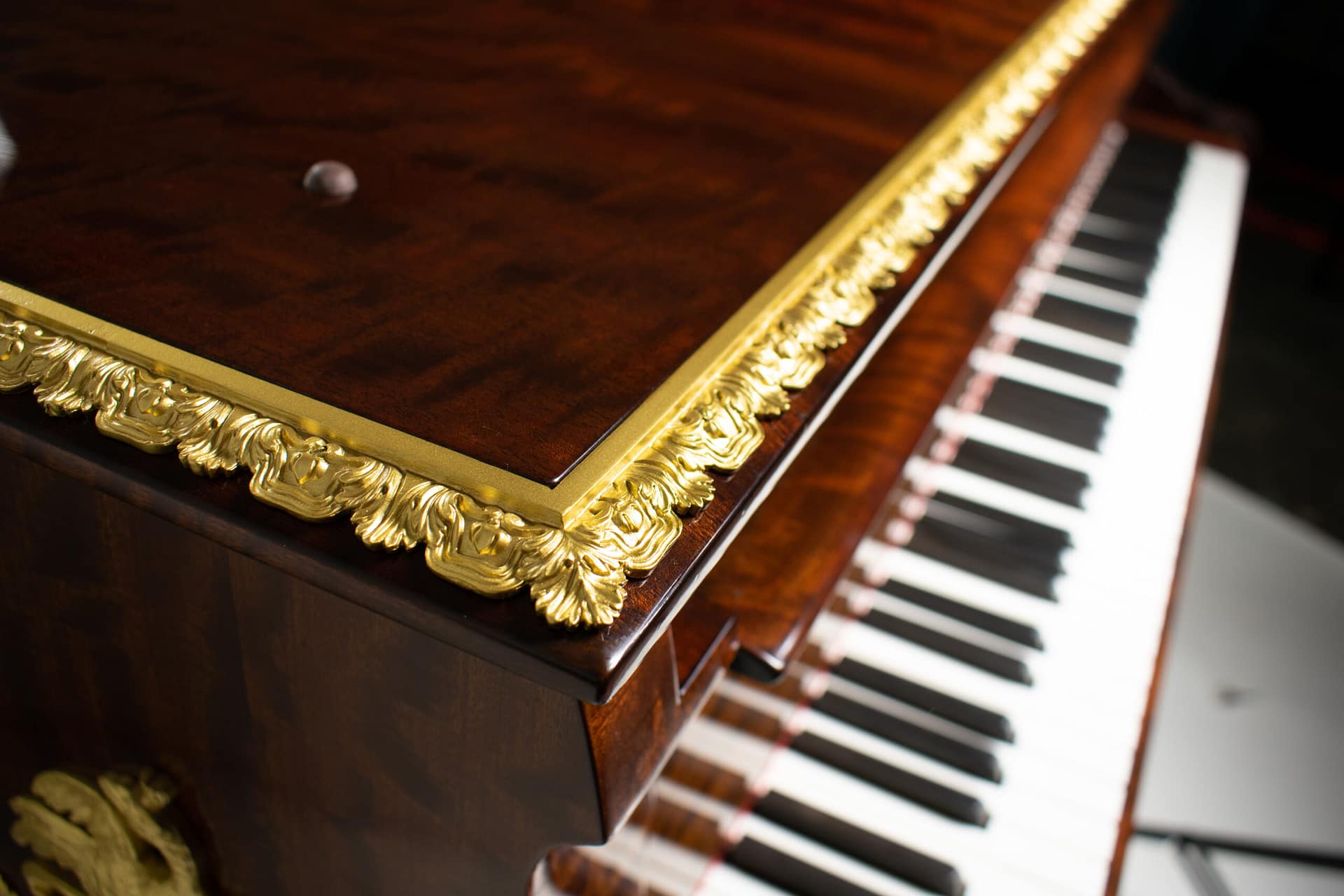
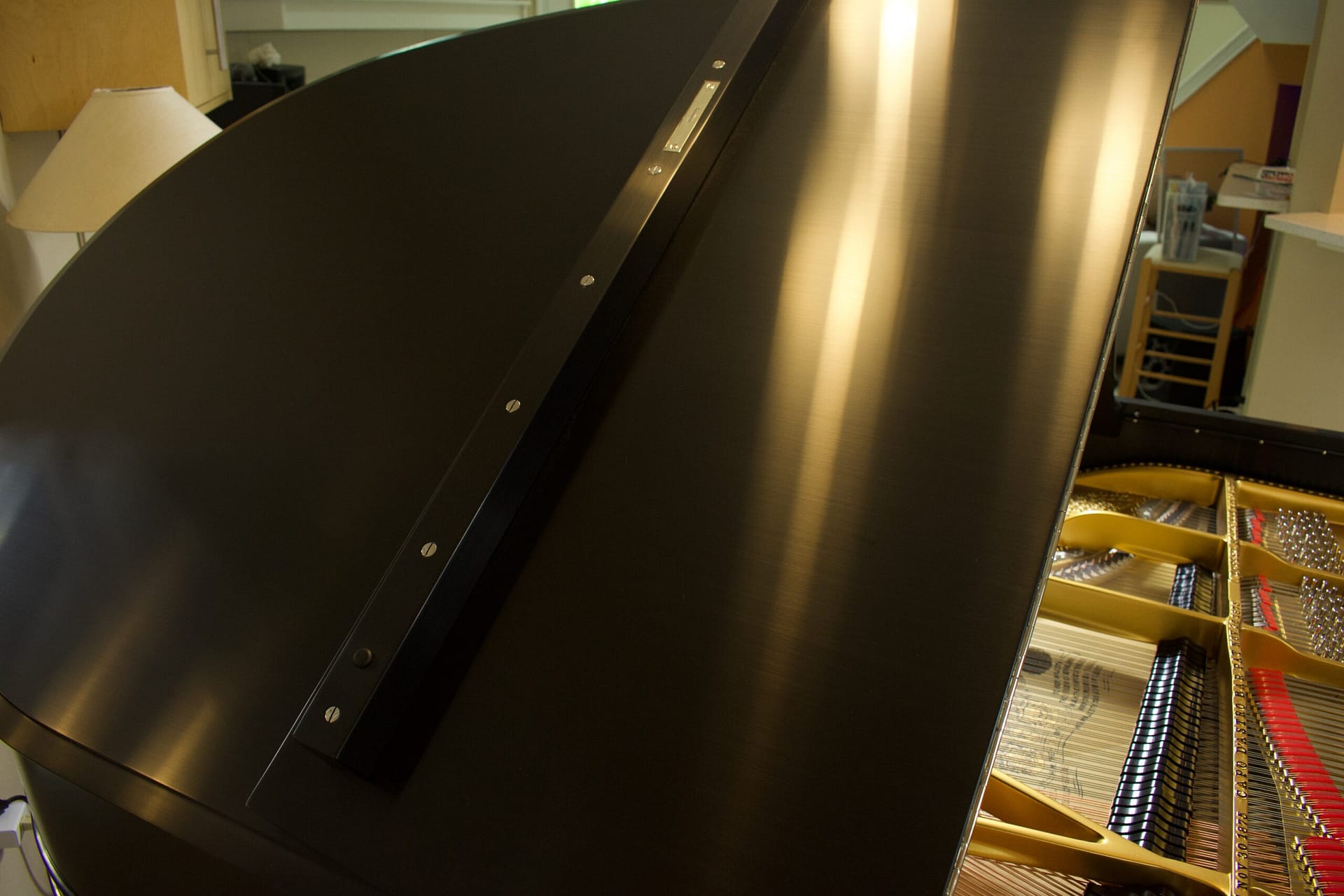
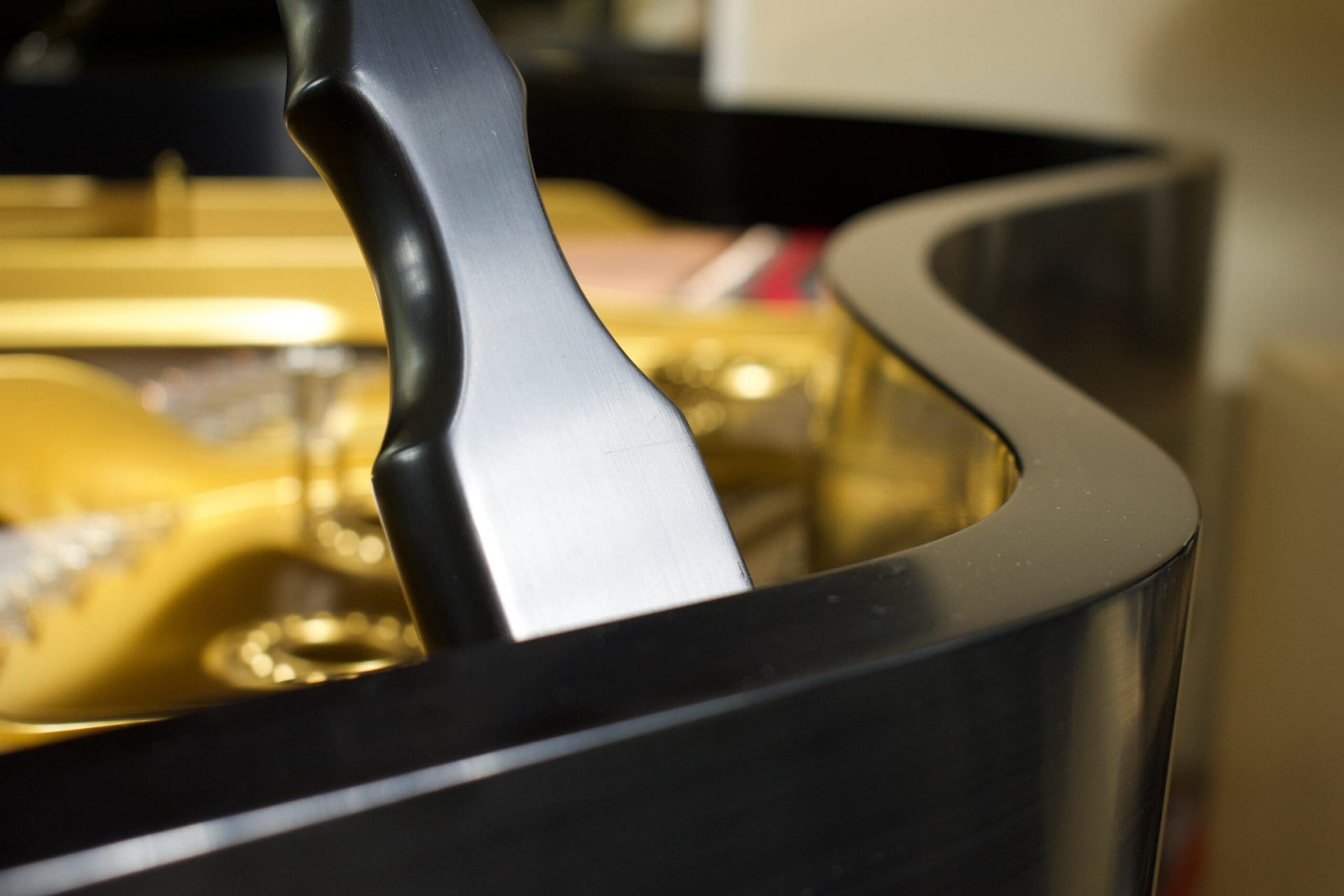
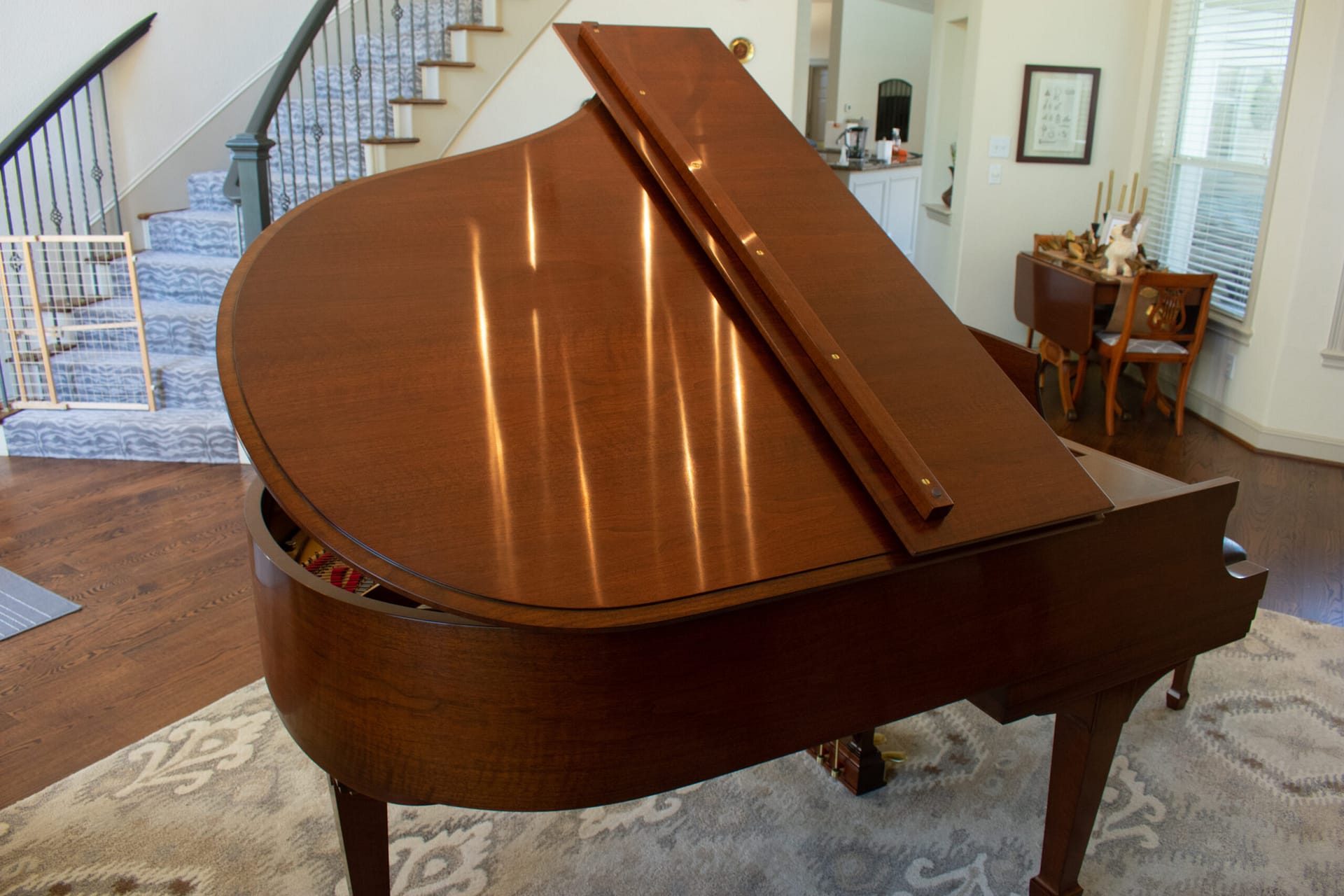
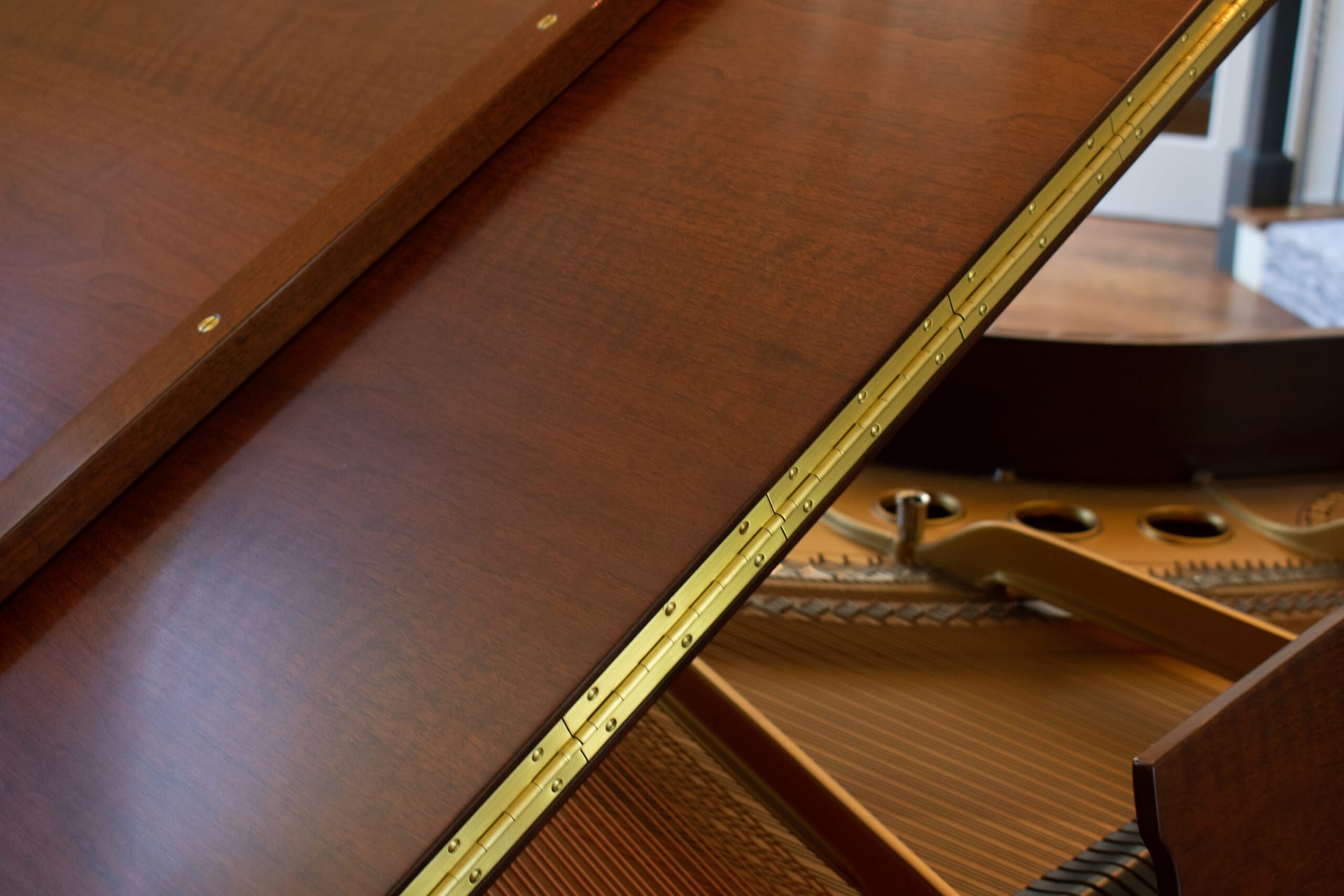
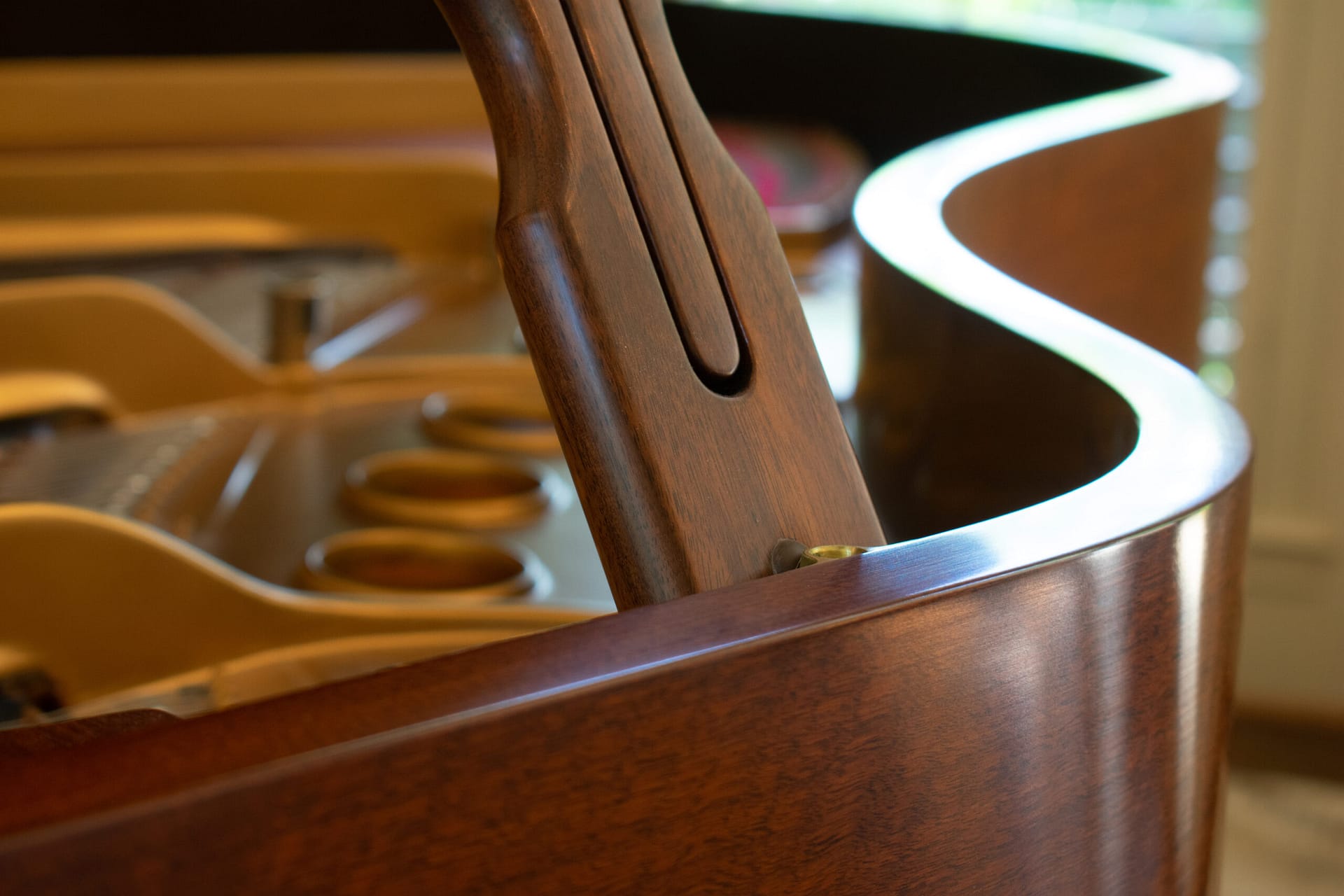
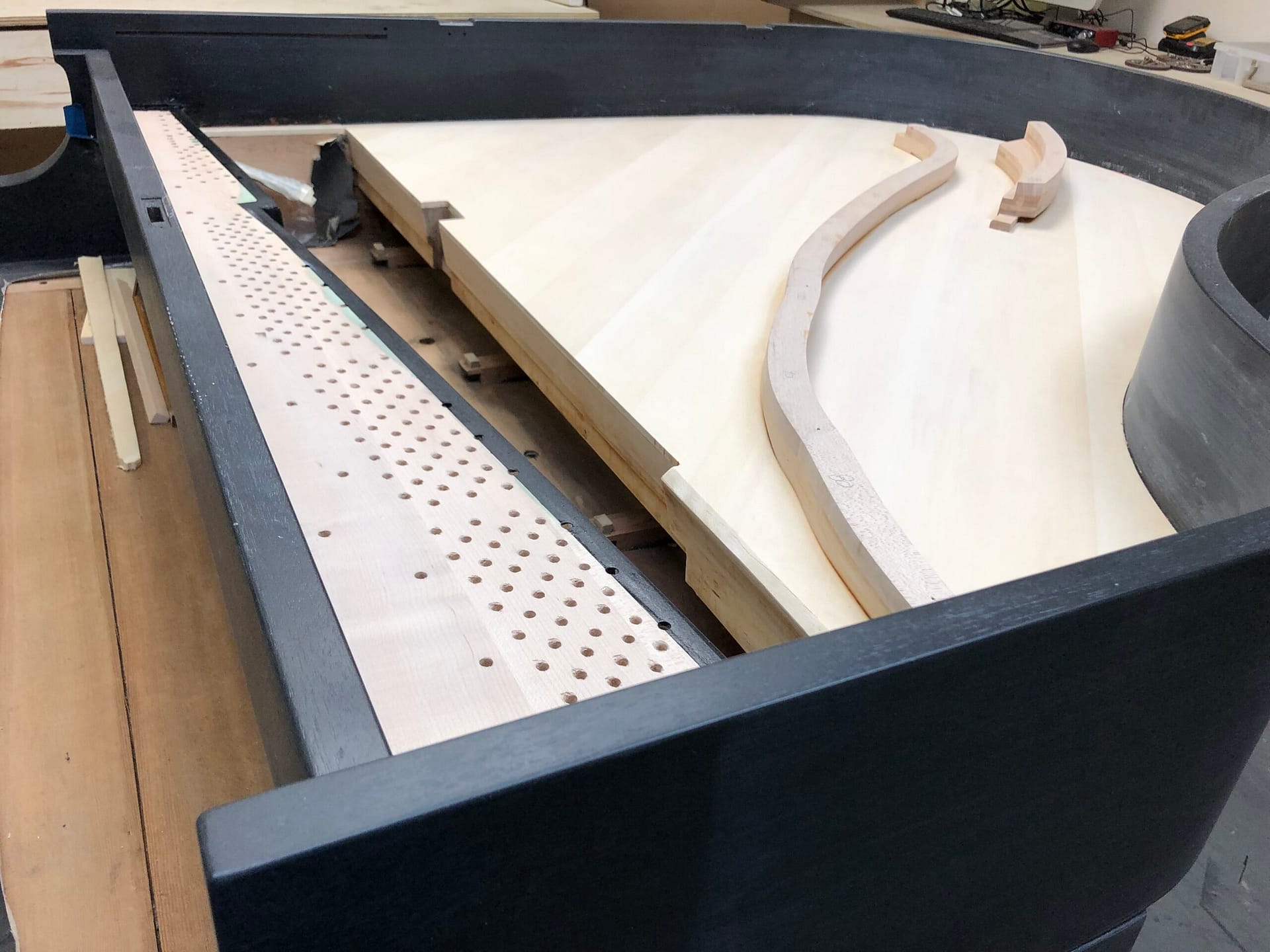
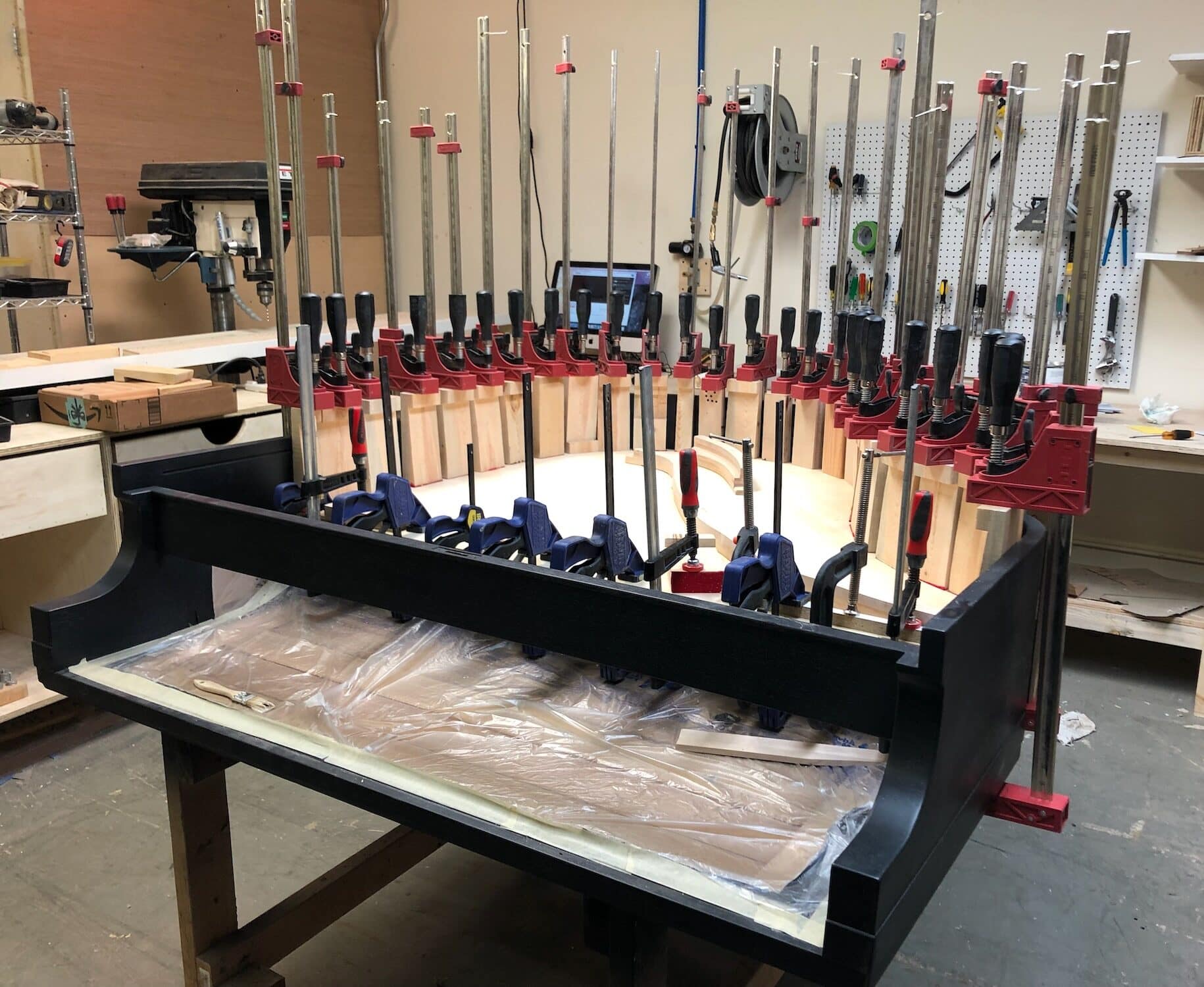
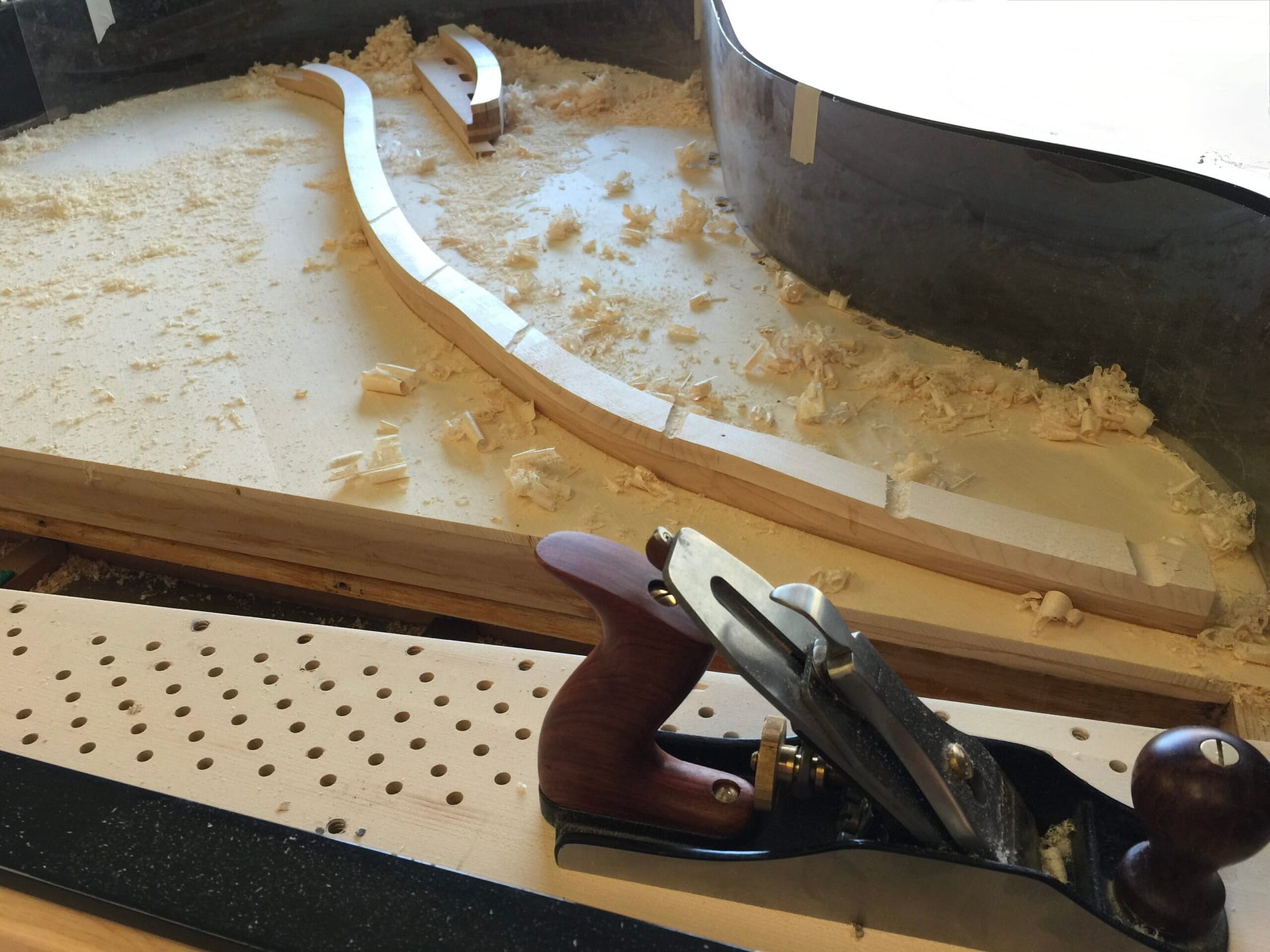
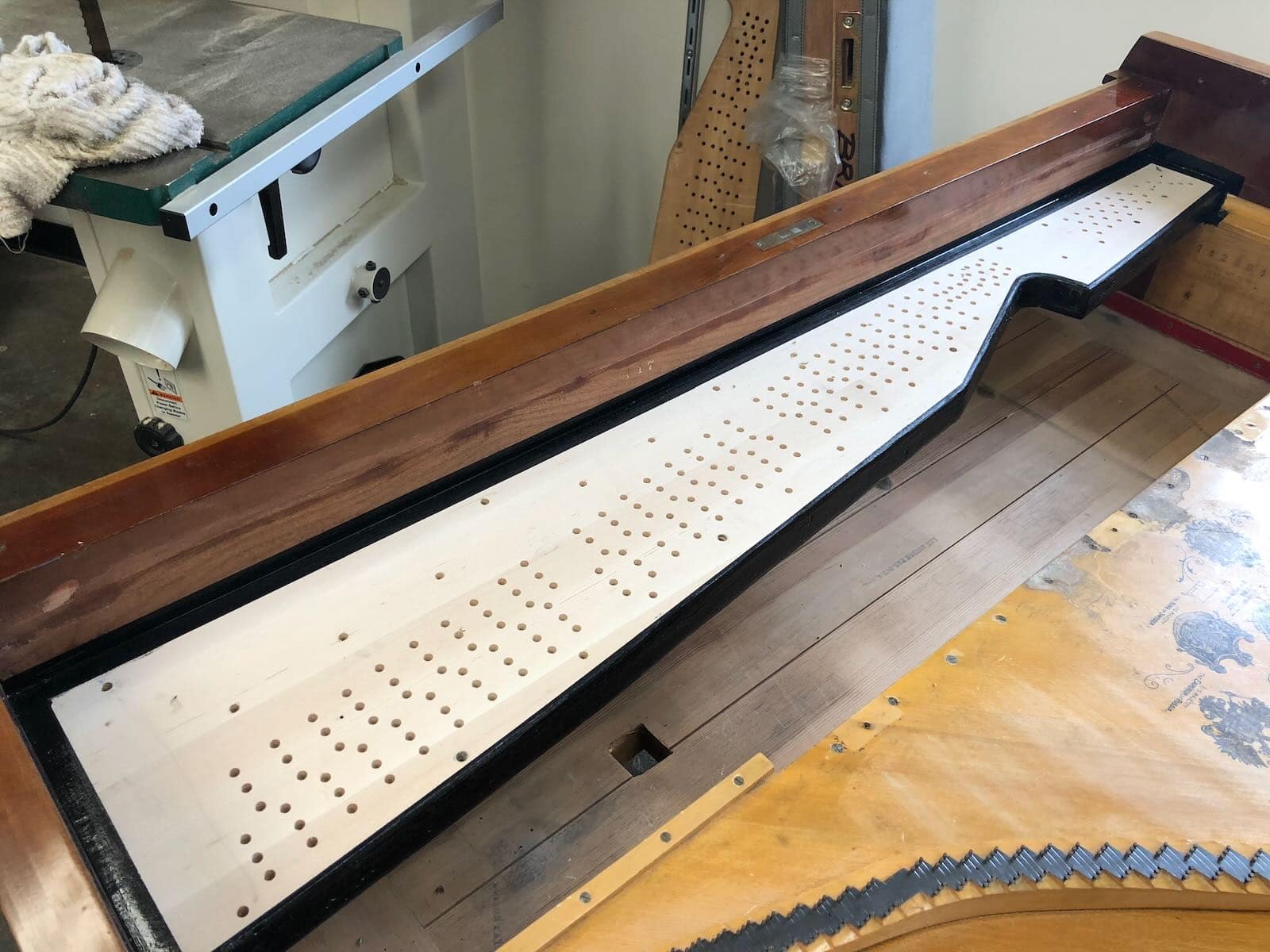
above: images of Steinway pianos rebuilt, refinished, and restored by Bradfield Piano.
above: video of Steinway & Sons model L grand piano fully restored by Bradfield Piano.
TRUSTED WITH IMPORTANT INSTRUMENTS
HOMEOWNERS, SCHOOLS, AND PERFORMANCE VENUES ACROSS NORTH TEXAS











Steinway Piano Restoration Cost
The cost to restore a Steinway piano depends on the condition of the instrument and the level of work required. Some pianos may only need partial restoration, while others require a full structural and mechanical rebuild.
In most cases, Steinway restoration falls into three general ranges:
Minor restoration or reconditioning: $5,000 to $12,000
Partial rebuild: $12,000 to $30,000
Complete Steinway restoration: $30,000 to $60,000
Because every Steinway is different, restoration work is tailored to the instrument. The best way to understand what your piano needs is through a proper evaluation.
For a full breakdown of pricing, what’s included at each level, and how to decide what makes sense for your piano, read our complete guide:
AN OVERVIEW OF
REBUILDING & RESTORING A STEINWAY
Rebuilding and restoring a Steinway is not a standardized process. Each instrument has its own condition, which determines whether specific parts should be replaced or preserved. Our role is to evaluate the piano honestly, explain the options clearly, and guide the process with technical details so you know what needs to be done to the piano and how that will improve or affect its touch and tone.

The Evaluation
Every restoration begins with a careful evaluation of the instrument, its history, and your goals for it. We lay out the technical details so you can see what we are seeing, options what can be preserved and not replaced, what truly needs restoration and the costs are for each part of restoration.
Transport
Once a plan is approved, we arrange secure transport to our shop. Before any work begins, the piano is inspected again to confirm details and ensure the restoration proceeds exactly as intended.
The Restoration Itself
Restoration work is carried out methodically, with detailed notes being taken before any part of the piano is disassembled, and attention to both mechanical precision and musical outcome. Decisions are made based on the technical specifications that Steinway & Sons makes available, as well as our clients desired touch and tone.
Final Review and Delivery
We invite you to visit the shop and spend time with your piano before it’s returned, ensuring it feels right to you. After delivery, we follow up and remain available for any adjustments, allowing the instrument to fully settle in its new environment.
IN-DEPTH PROCESS OF
REBUILDING A STEINWAY
Rebuilding a Steinway is often a preferred choice over replacing it. Many older Steinway pianos — particularly those built before World War II — were constructed during a period widely regarded as a high point in the company’s history and are well worth preserving.
We rebuild and restore Steinway pianos with a focus on long-term performance, structural integrity, and musical character. Our work is guided by deep familiarity with Steinway design and construction, and by experience gained through direct employment for Steinway and factory training as well as our decades hands-on restoration work. The sections below outline how we approach Steinway rebuilding in greater detail.
The cabinet finish is often the most visible sign of age on a Steinway, but refinishing is performed only after the structural and mechanical work is complete. The goal is to restore the finish in a way appropriate to the piano’s period and character.
The original finish is removed carefully and the cabinet repaired where needed. Veneer damage, loose joints, and edge wear are corrected before any new finish is applied. Color is matched deliberately so the instrument retains the appearance it would have had when properly maintained rather than over-restored.
Multiple coats of lacquer are applied and leveled over time, then hand rubbed to produce a stable surface with depth rather than a high gloss showroom shine. The result is a finish that complements the instrument instead of drawing attention away from it.
The action determines how the piano responds to the player. Over decades, felt compresses, leather hardens, centers loosen, and geometry changes. The instrument may still produce sound, but control and consistency are gradually lost.
During rebuilding, the action is disassembled and critical components are replaced where wear has affected performance. New hammers, shanks, and wippens are fitted and aligned so each key operates consistently across the keyboard. Regulation is then carried out to restore proper relationships between the key, repetition, and hammer travel.
After mechanical regulation is complete, the instrument is voiced and refined so the touch and tone are balanced throughout the scale. The goal is not simply a lighter or heavier action, but predictability — the player should be able to repeat notes easily, control dynamics, and play quietly without loss of tone.
The pinblock holds the tuning pins under several tons of combined string tension. Over many decades the laminated wood gradually loses its ability to grip the pins securely. The piano may still be playable, but tuning stability becomes inconsistent and the instrument will not hold pitch reliably.
During restoration the condition of the original pinblock is carefully assessed. In some cases it can be retained, but when the wood has lost sufficient holding power a new pinblock is fitted. This is a structural repair rather than a cosmetic one and is often essential for the long term reliability of the instrument.
A properly fitted pinblock allows the strings to be brought to pitch safely and to remain stable between tunings. Without adequate pin torque, even a newly rebuilt piano cannot perform as intended.
Piano strings operate under extremely high tension and gradually lose both strength and tonal clarity over decades of use. Even when a piano can still be tuned, aging wire no longer vibrates consistently and the sound becomes thin, uneven, or harsh.
During restringing the original wire is removed and replaced with new wire matched to the scale design of the instrument. Bass strings are custom made for the individual piano so that tension and tonal balance remain appropriate to the original construction. The purpose is not to increase volume, but to restore sustain, stability, and the natural character of the instrument.
We restring using Mapes piano wire along with Klinke tuning pins and agraffes — the same materials used in new Steinway pianos. Using these components allows the instrument to function within its intended design tolerances and ensures proper tuning stability under full string tension.
A properly executed restringing allows the piano to hold pitch reliably and respond evenly across the keyboard. Without it, even a rebuilt action and soundboard cannot perform as intended.
The keys form the player’s direct connection to the instrument, and their condition affects both touch and control. Over time bushings compress, keyframes wear, and original keytops chip, loosen, or discolor. These changes alter key travel, friction, and balance, making the piano feel uneven or unresponsive.
During restoration the keyframe is serviced and regulated so each key moves freely and returns consistently. Key bushings are replaced as needed and key height, dip, and spacing are corrected to proper specifications. When original ivory keytops are present they are preserved whenever possible; when they cannot be retained, new keytops are fitted and shaped to match the original geometry.
The objective is not cosmetic appearance alone, but uniform touch across the keyboard so the player can control dynamics and repetition reliably.
The cast iron plate is the structural foundation of the piano. It supports the full tension of the strings and anchors the tuning system of the instrument. During a proper rebuilding, the plate is removed from the piano and the instrument is completely disassembled.
After removal the plate is cleaned, inspected, and prepared before being refinished in traditional bronze lacquer. This process is not performed for appearance alone. A properly prepared plate ensures correct bearing surfaces, clean agraffe seating, and accurate reinstallation of the scale.
All plate hardware is serviced or replaced as needed and reinstalled during restringing so that string alignment and downbearing are correct. When completed, the plate, hardware, and stringing system function together as a single structure, providing tuning stability and long term reliability.
After structural rebuilding and restringing are complete, the most time-intensive work begins. A rebuilt piano does not immediately play correctly when assembled. The instrument must be gradually stabilized, regulated, and voiced.
The action is repeatedly adjusted in our shop as the new parts settle. Key height, let-off, drop, repetition, and hammer alignment are refined over multiple regulation cycles. During this period the piano receives several tunings so that the string tension stabilizes under playing conditions.
Voicing is then carried out to shape the tone. Hammers are carefully worked so the instrument develops an even response and a controllable dynamic range rather than a hard or uneven sound. This stage determines whether a rebuilt piano merely functions or truly becomes a musical instrument again.
Only after the piano is stable under tuning and playing is the restoration considered complete.
STEINWAY PIANO RESTORATION
Restoration is not simply replacing worn parts.
It is the careful correction of structure, action, and tone so the instrument functions and sounds as Steinway originally intended.
STEINWAY PARTS
Genuine Replacement Parts
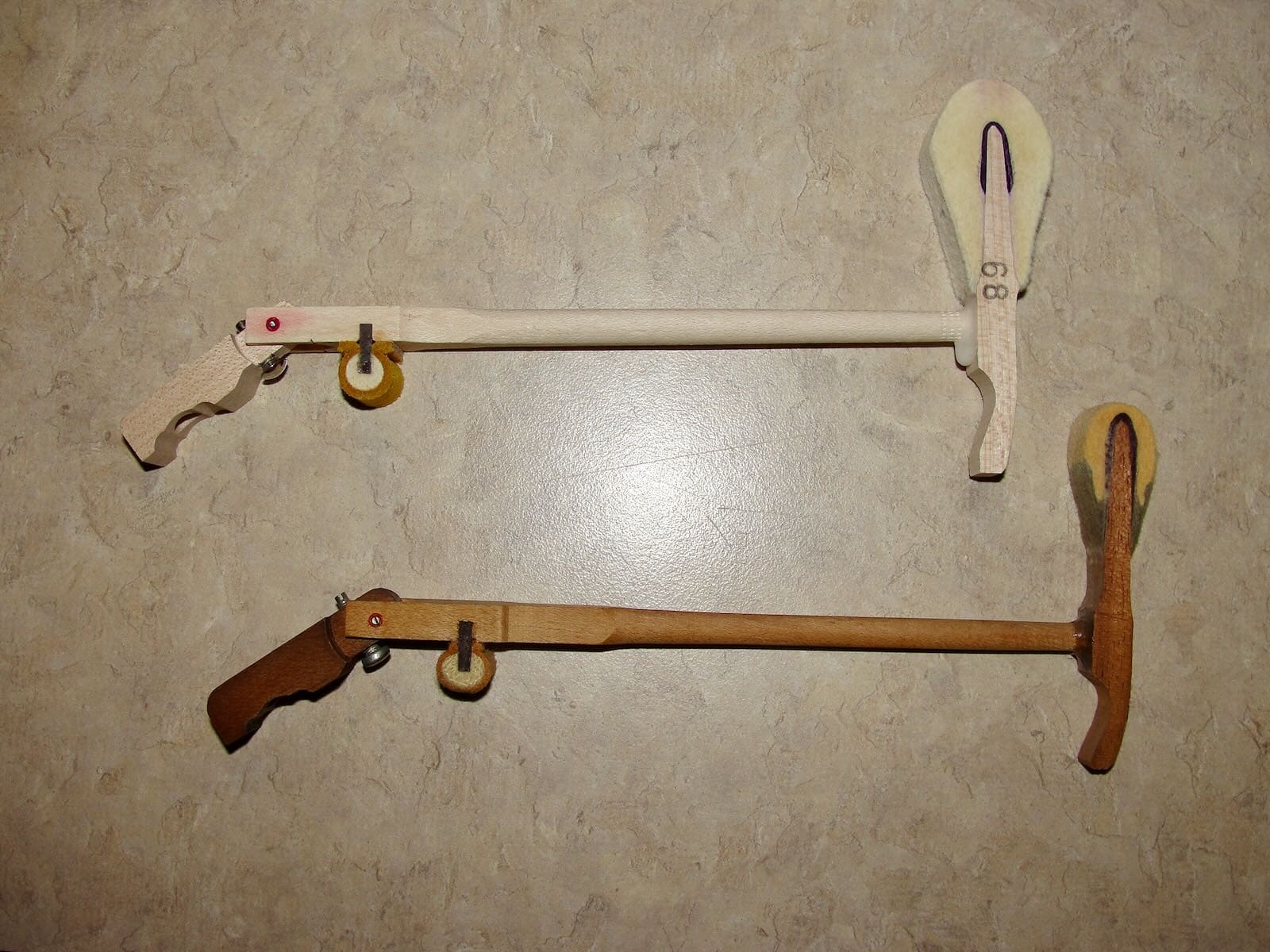
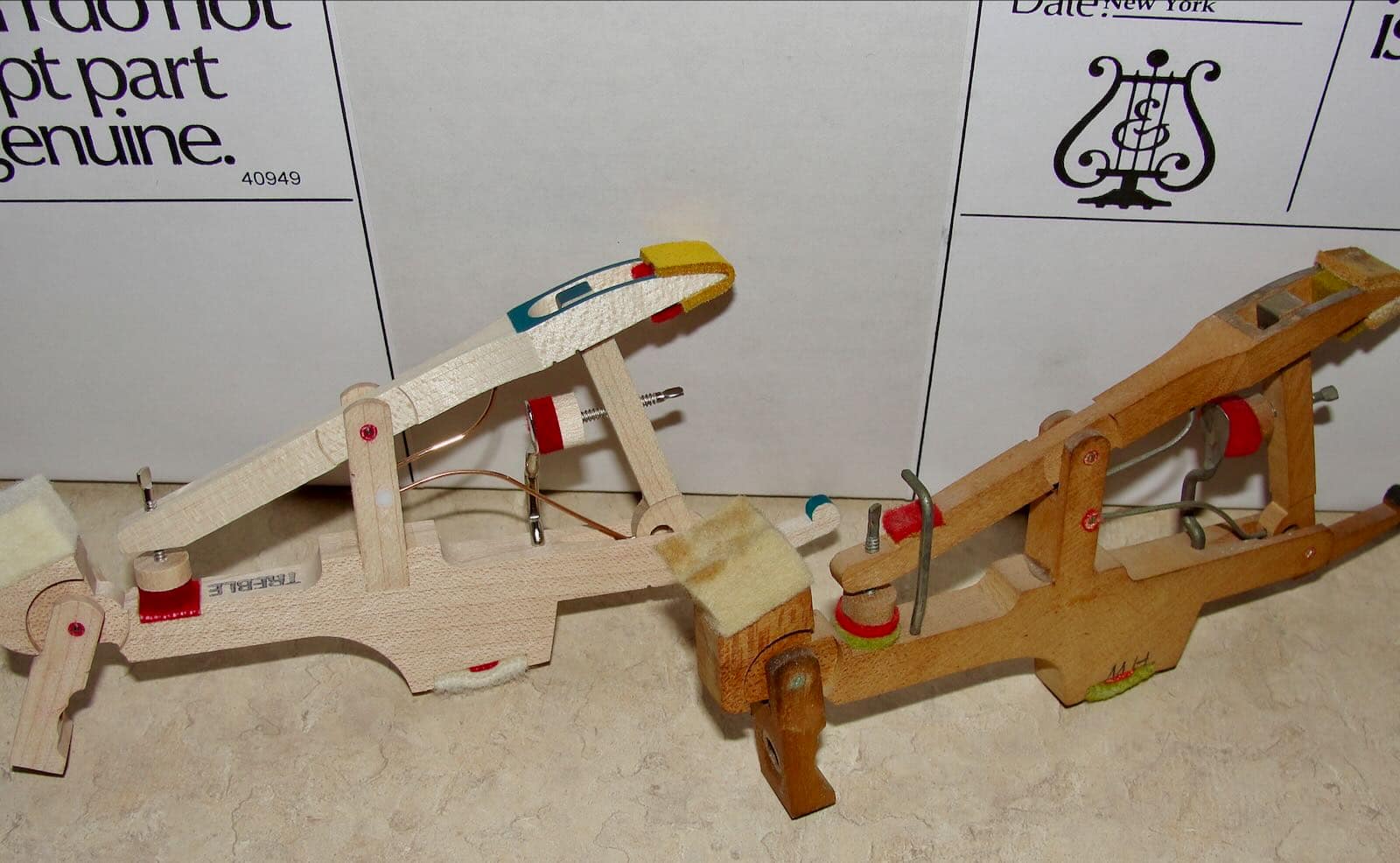
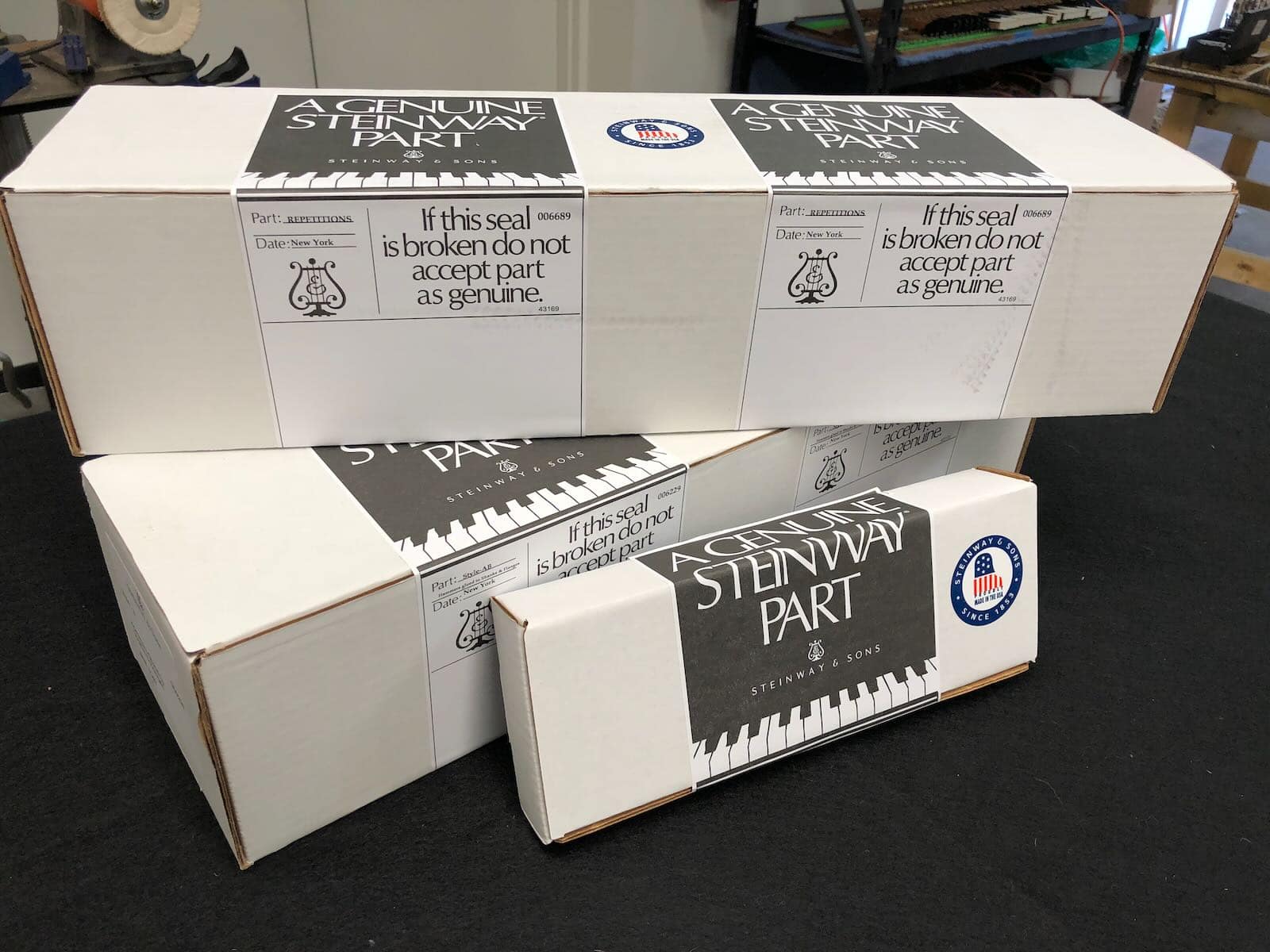
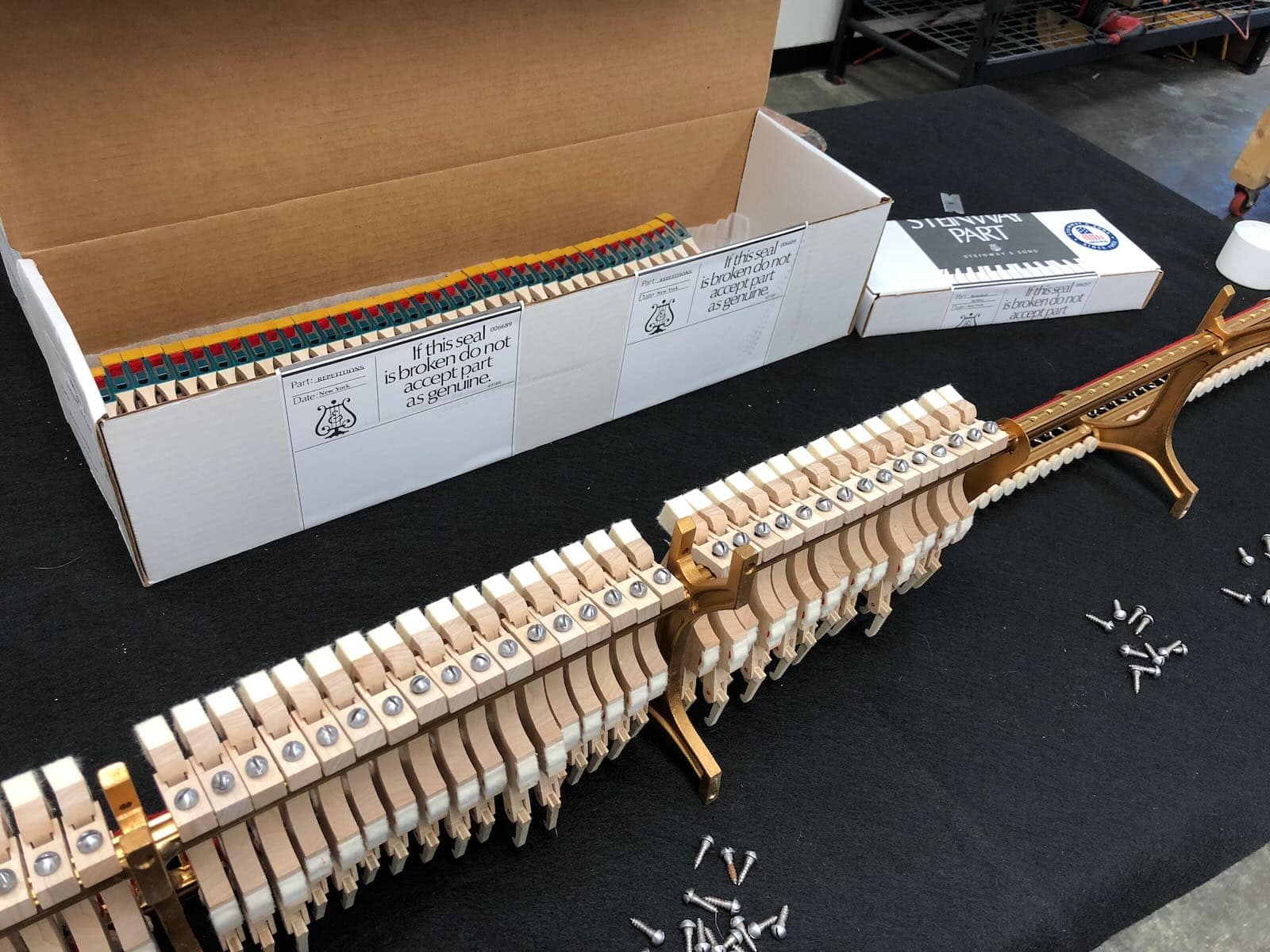
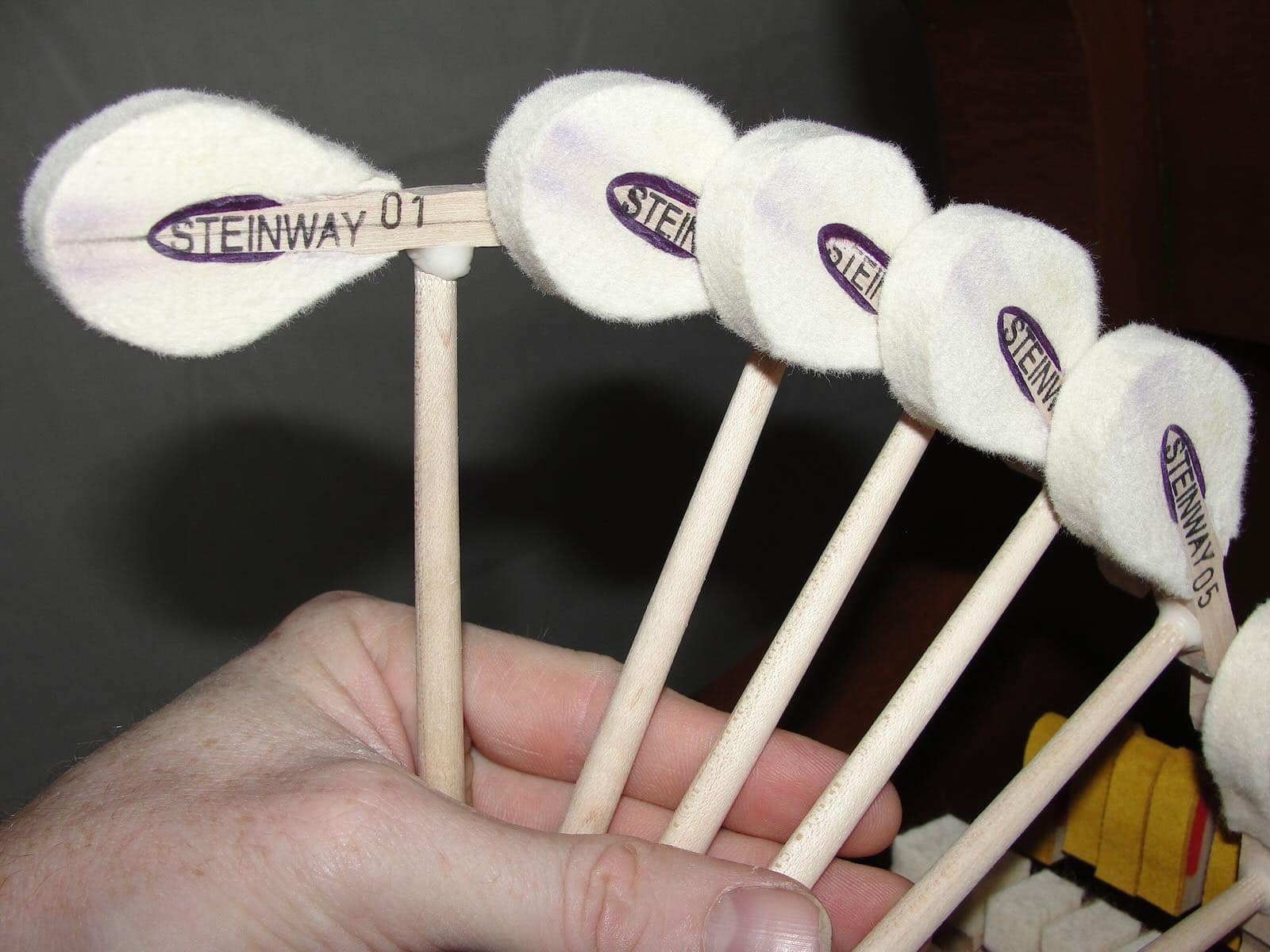
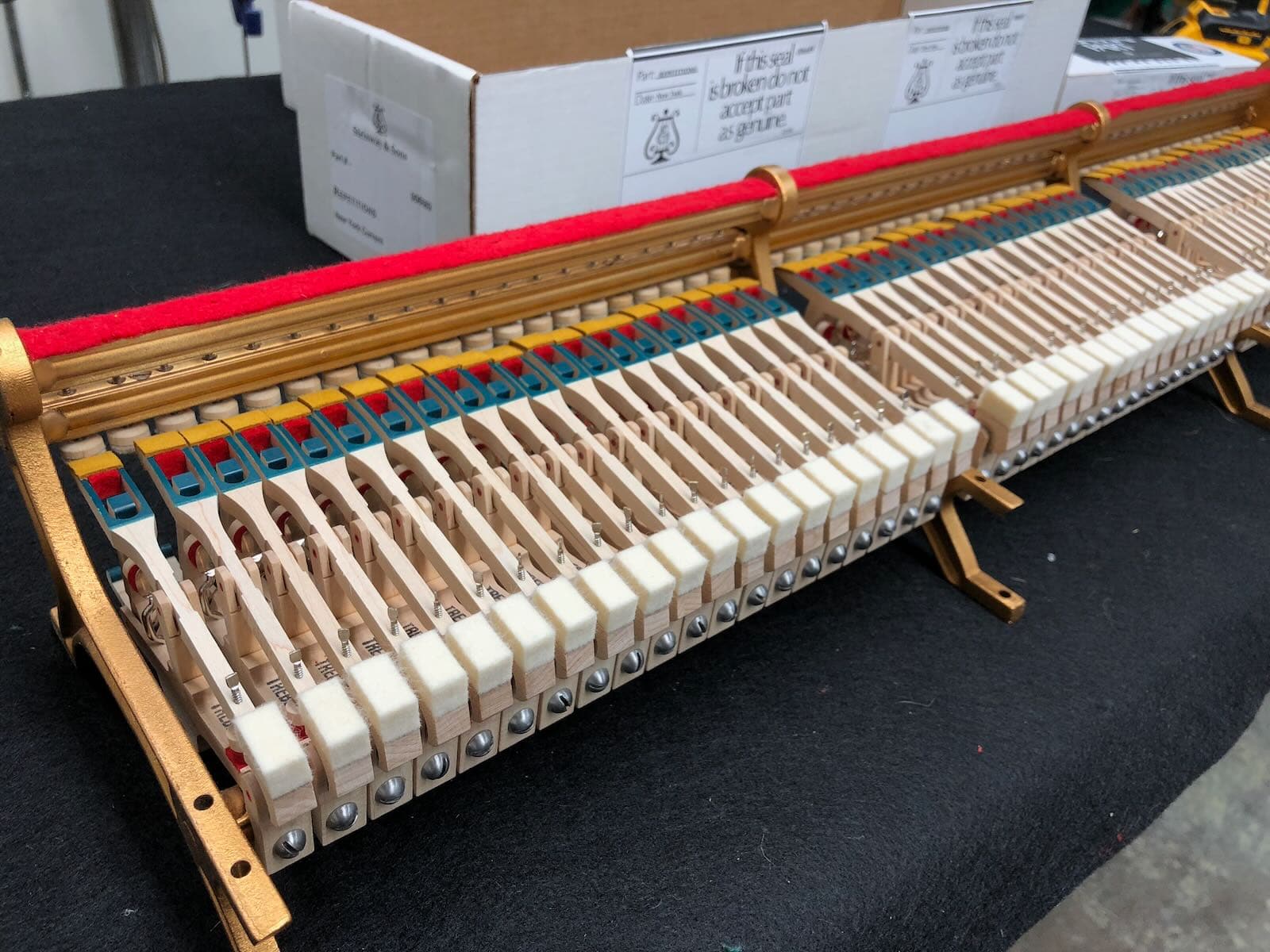
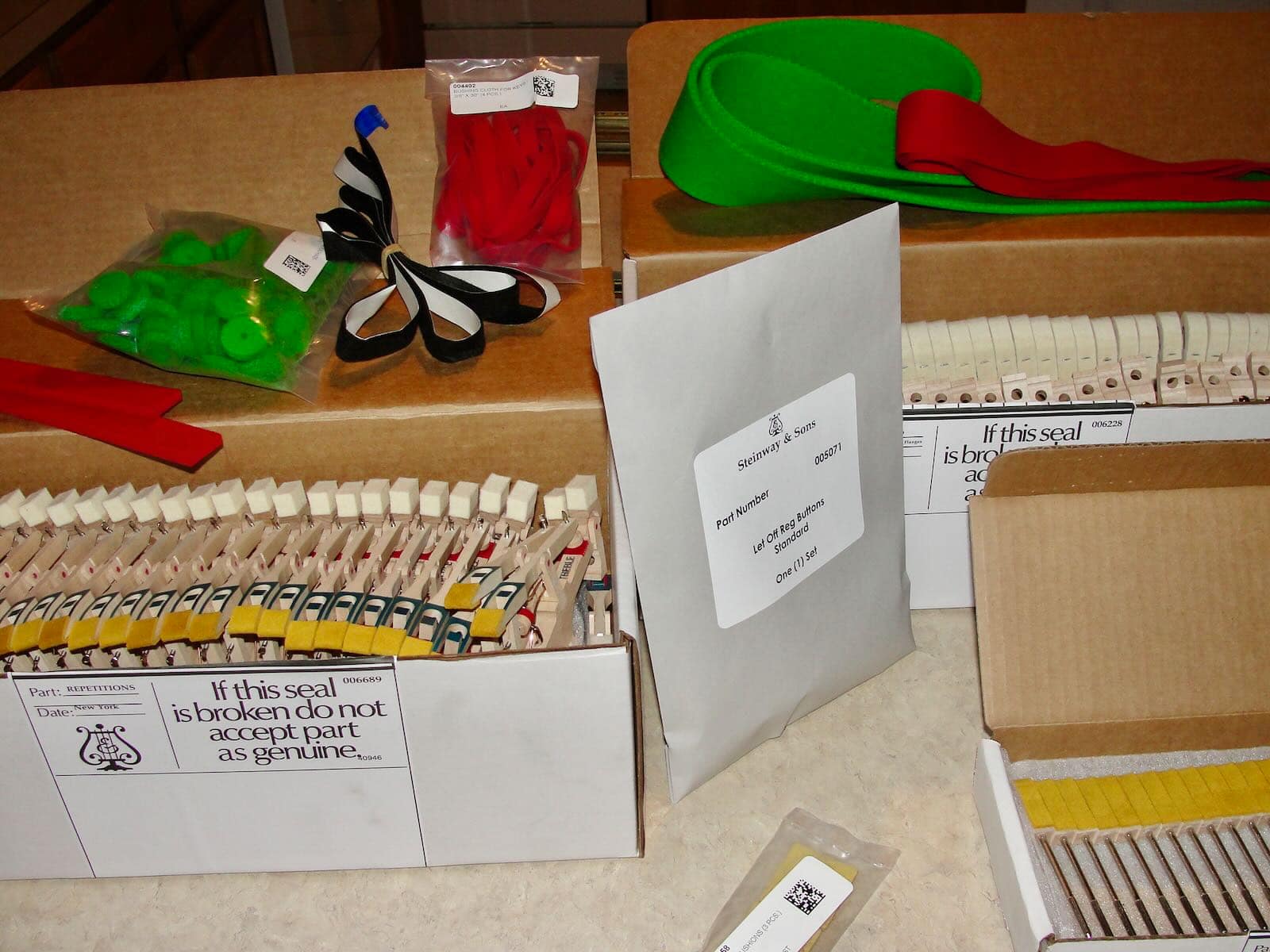
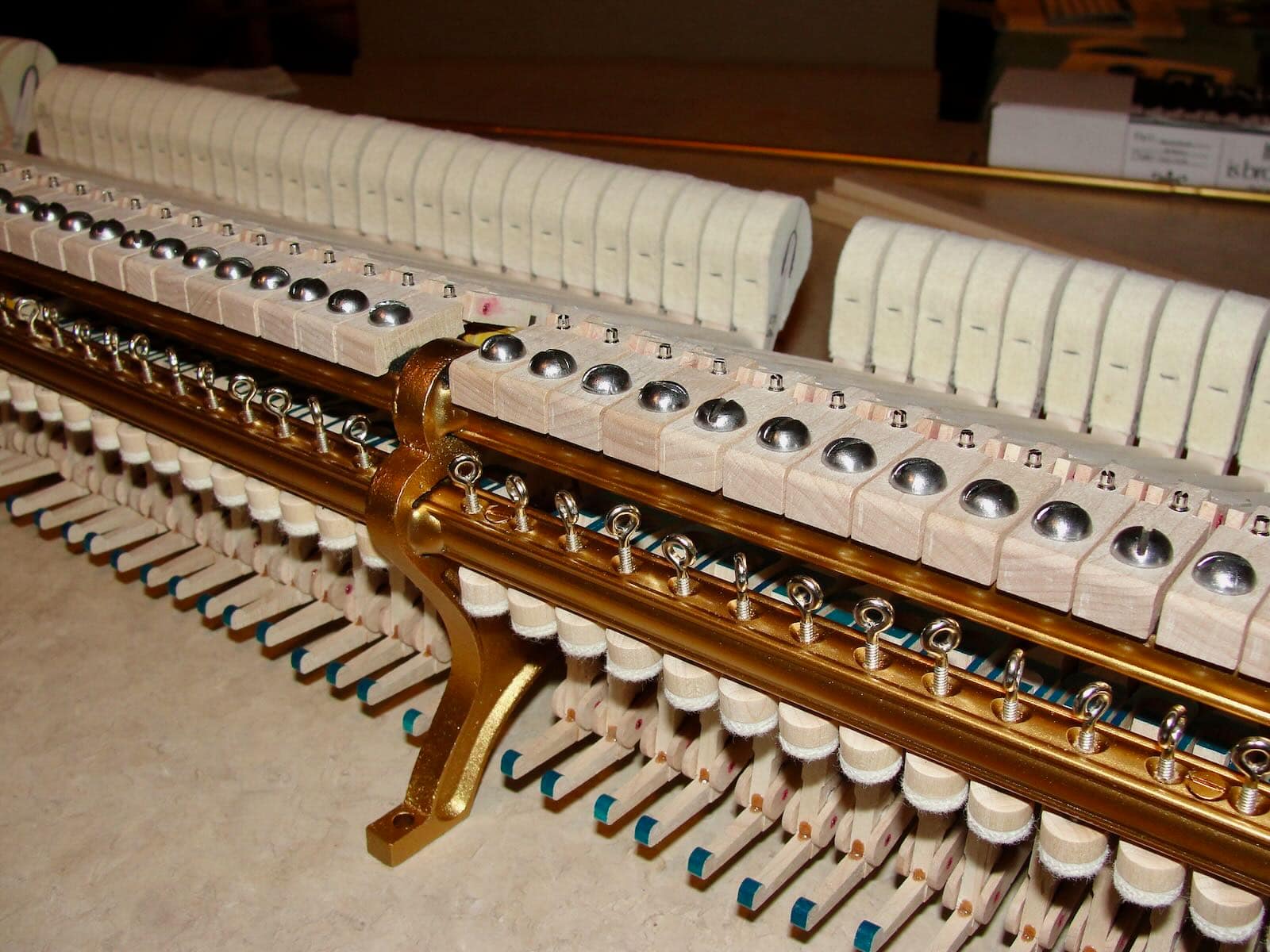
During restoration, worn action components are replaced with Steinway parts that are bought directly from Steinway & Sons in NY. These are not generic piano parts but components selected to preserve the instrument’s original scale design and performance characteristics.
MORE ABOUT STEINWAY RESTORATION
A Steinway grand is designed to last for generations, but only if its original design is preserved as it ages. Restoration is not simply replacing worn parts. It is the process of returning the instrument to the mechanical and tonal relationships Steinway intended. Proper restoration requires understanding how Steinways are constructed and how they change over decades of use and environmental movement. Our work begins with complete disassembly and inspection so each structural component can be evaluated in context rather than treated as an isolated repair.
Structural elements such as the pinblock, plate fit, and bearing are addressed in correct sequence so the piano functions as a unified system. The goal is not a collection of new parts, but a stable musical foundation that supports tuning, tone, and touch long term. Strings, tuning pins, and hardware are then installed to establish a stable scale and tension structure. Regulation and voicing follow, with careful attention to how each note speaks and responds under the player’s hands. Adjustments are made incrementally so each correction supports the next. The final result is not simply a piano that plays, but one that responds evenly, predictably, and musically across its full range — the way a Steinway is intended to perform.
STEINWAY UPRIGHT PIANO RESTORATION
Upright Steinway pianos demand a different approach than grands, but the standards are no less exacting. Their design, scale, and mechanical layout require careful judgment to restore proper touch, balance, and tonal clarity.
Our experience with Steinway uprights allows us to evaluate what can be preserved, what should be corrected, and what will most meaningfully improve long-term performance. Whether the goal is a full restoration or targeted mechanical and tonal work, every recommendation is guided by how the instrument should function and feel when played. The result is an upright Steinway that responds cleanly, plays evenly, and meets the musical expectations the name implies.

Discussing Your Piano
Every Steinway is different, and the most useful first step is simply a conversation. Owners often contact us with questions about whether their piano should be restored, partially rebuilt, serviced, or left largely original. In many cases photographs, the serial number, and a description of how the instrument currently plays are enough to begin forming an initial opinion.
If the piano appears to be a candidate for restoration, we can arrange a more detailed evaluation and explain what work would meaningfully improve performance and what should be preserved. Our goal is not to recommend the most work possible, but the most appropriate work for the instrument and for your intentions as an owner.
Give us a call
and let’s talk.
- Bradfield Piano Restoration, Moving and Storage, LLC
- 13650 T I Blvd STE 210 Dallas, TX 75243
- 214-883-1885
- Piano moving and storage throughout Texas. Restoration services available nationwide.


