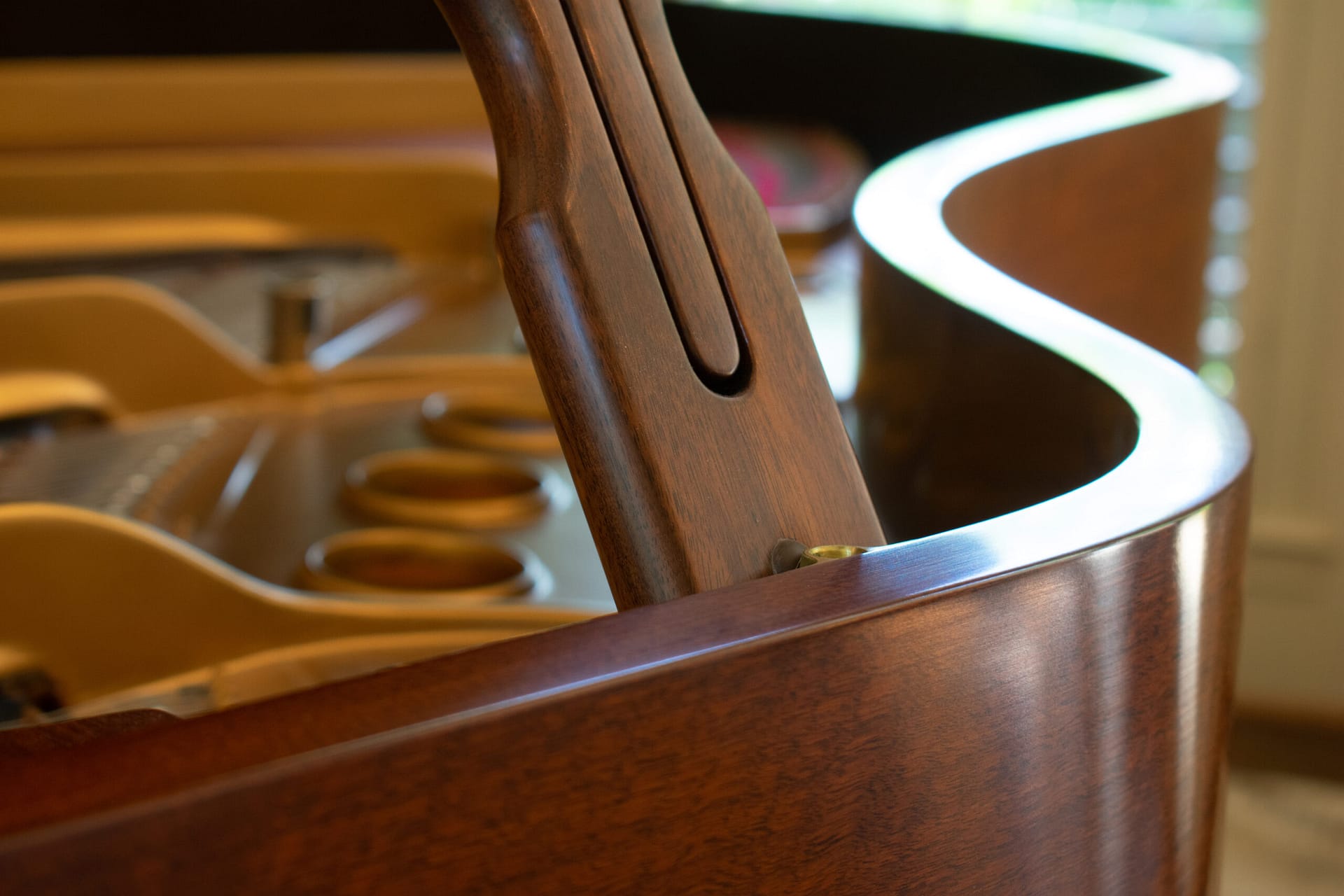
Piano restoration is not limited to mechanical work. The cabinet is a structural and visual component of the instrument, and its condition directly affects the value, longevity, stability, and how the piano is experienced in the home. Proper refinishing preserves the original character of the instrument while protecting the wood for decades of use.
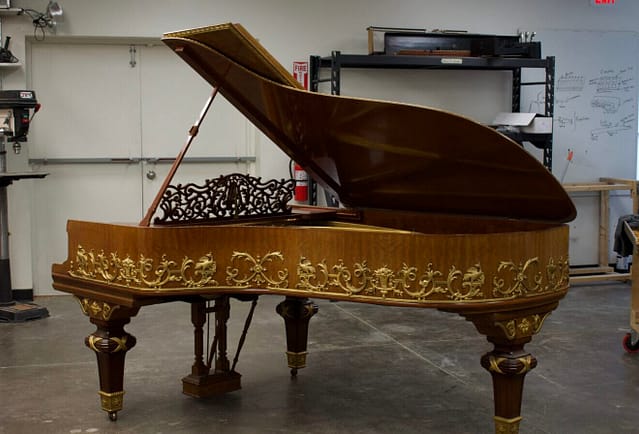
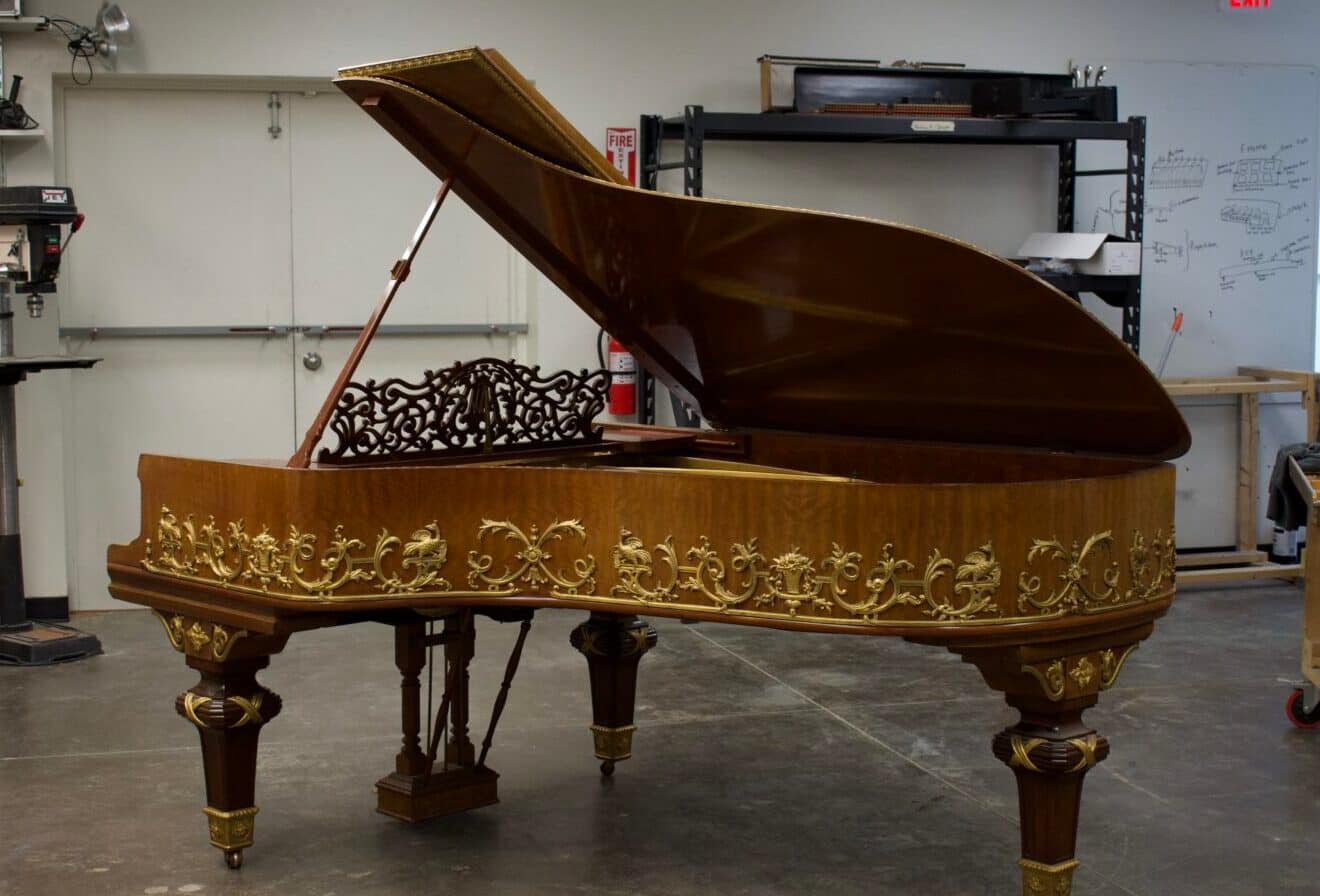
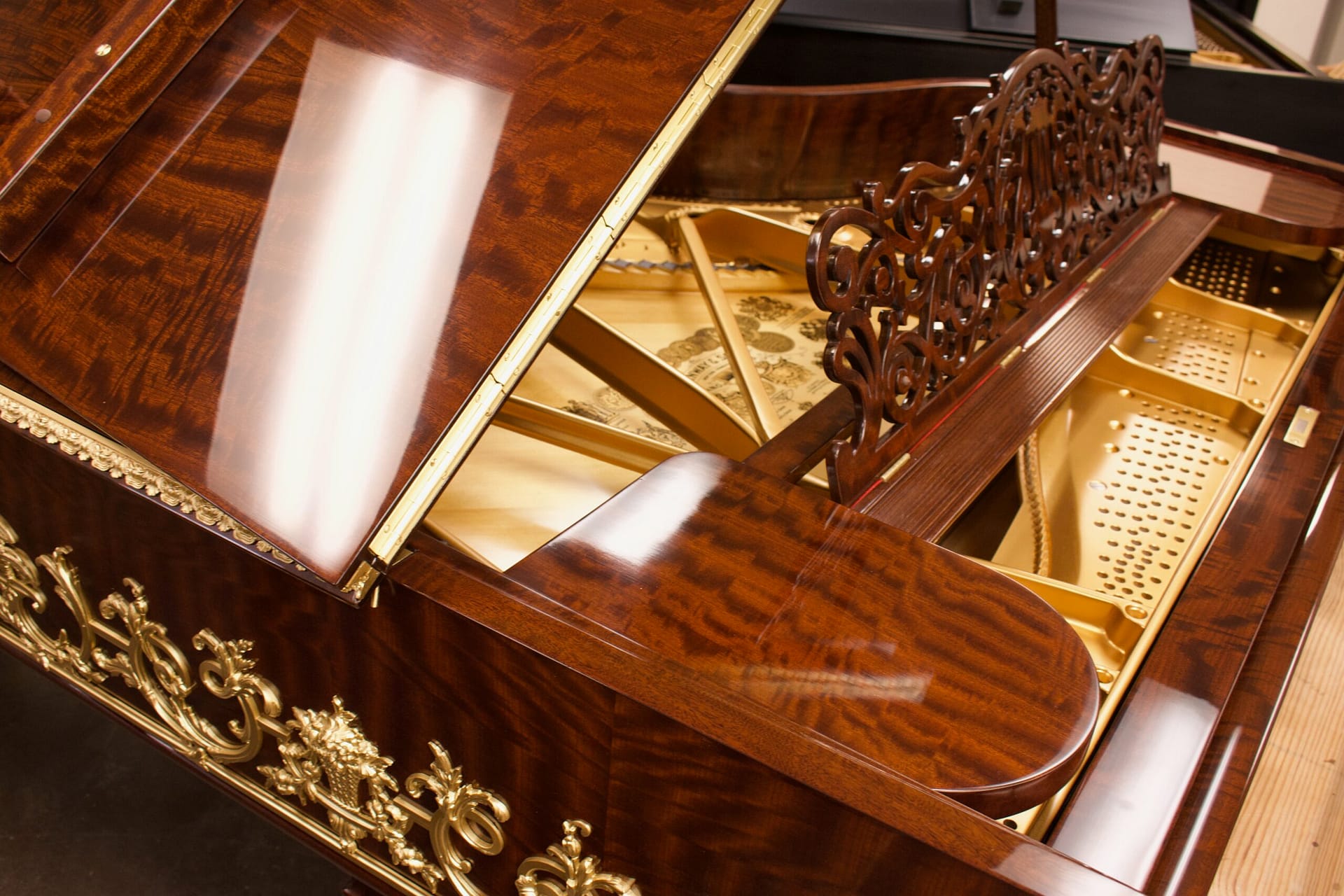
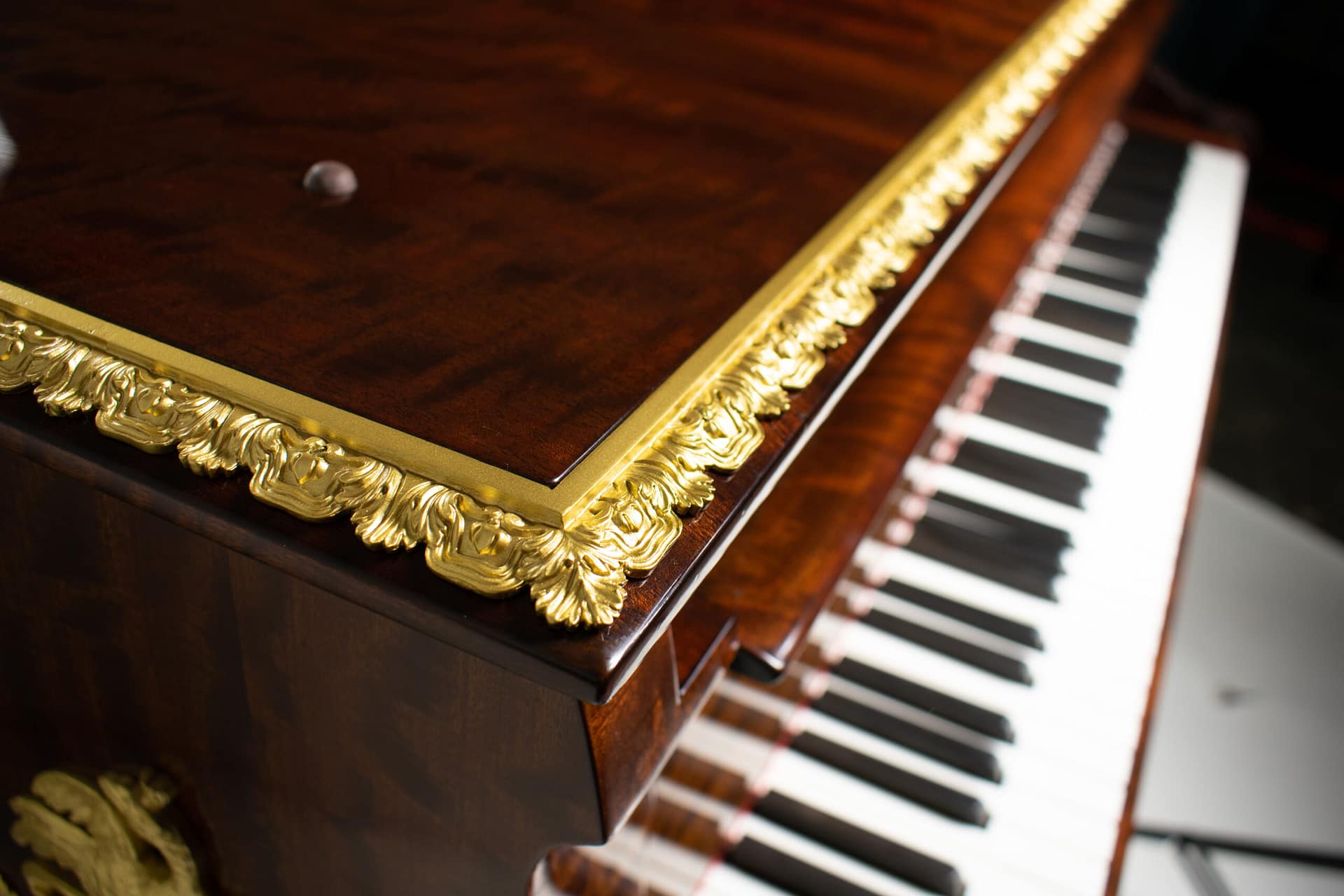
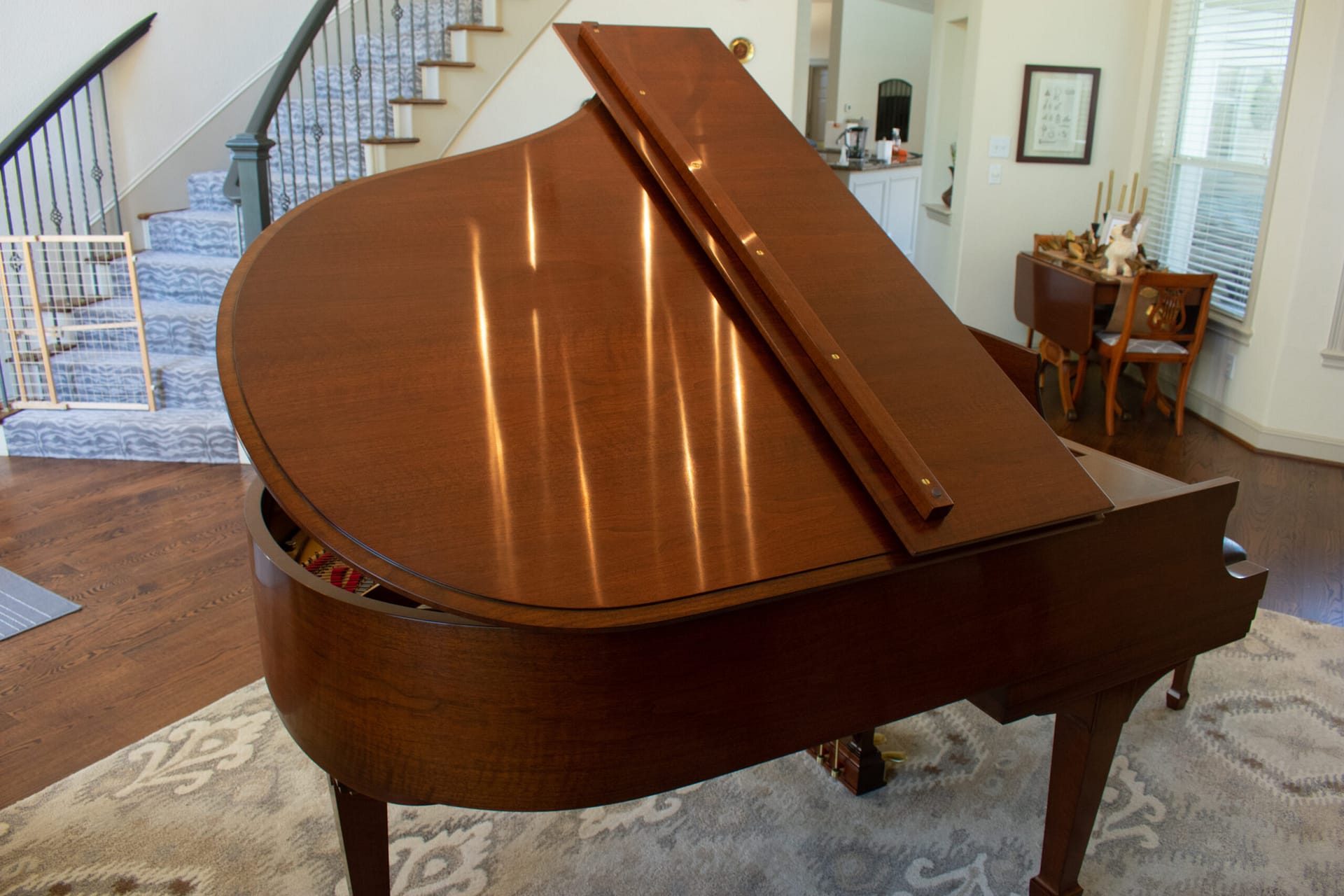
The images below show a Steinway & Sons Art Case Model B grand piano built in Hamburg in 1893. Carefully restored by Bradfield Piano in 2018, the instrument is veneered in sapele mahogany and retains its original gold ormolu — details that speak to the craftsmanship and decorative ambition of Steinway’s Art Case work at the turn of the century.
REFINISHING VS RESTORATION
Piano restoration and piano refinishing are sometimes used interchangeably, however piano restoration focuses on how an instrument functions — how it plays, sounds, and responds as well as cosmetic restorations.
Piano refinishing, by contrast, addresses the exterior surfaces of the instrument. It involves stripping and rebuilding the finish of the cabinet to change the piano’s appearance. Refinishing does not alter how the piano plays, but it can significantly change how it looks and how it fits within a space.
Refinishing may be done on its own, or as part of a larger restoration. In some cases, a piano benefits from mechanical work without cosmetic changes. In others, refinishing makes sense once structural and mechanical issues have been addressed. The decision depends on the condition of the instrument, how it is used, and the owner’s goals. In the case of the Hamburg Steinway, the owner opted for a complete piano restoration.
TRUSTED WITH IMPORTANT INSTRUMENTS
HOMEOWNERS, SCHOOLS, AND PERFORMANCE VENUES ACROSS NORTH TEXAS
THE PIANO REFINISHING PROCESS
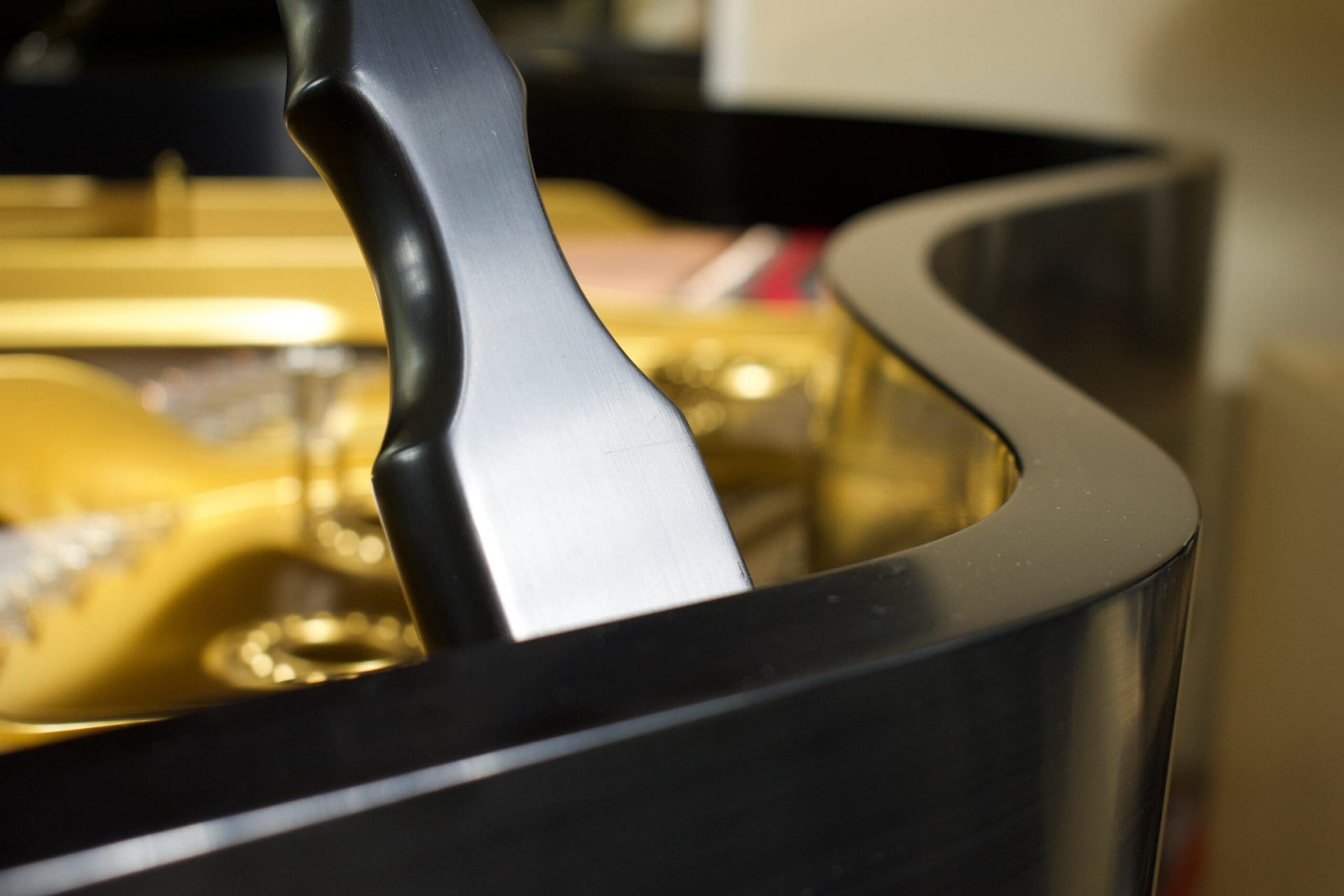
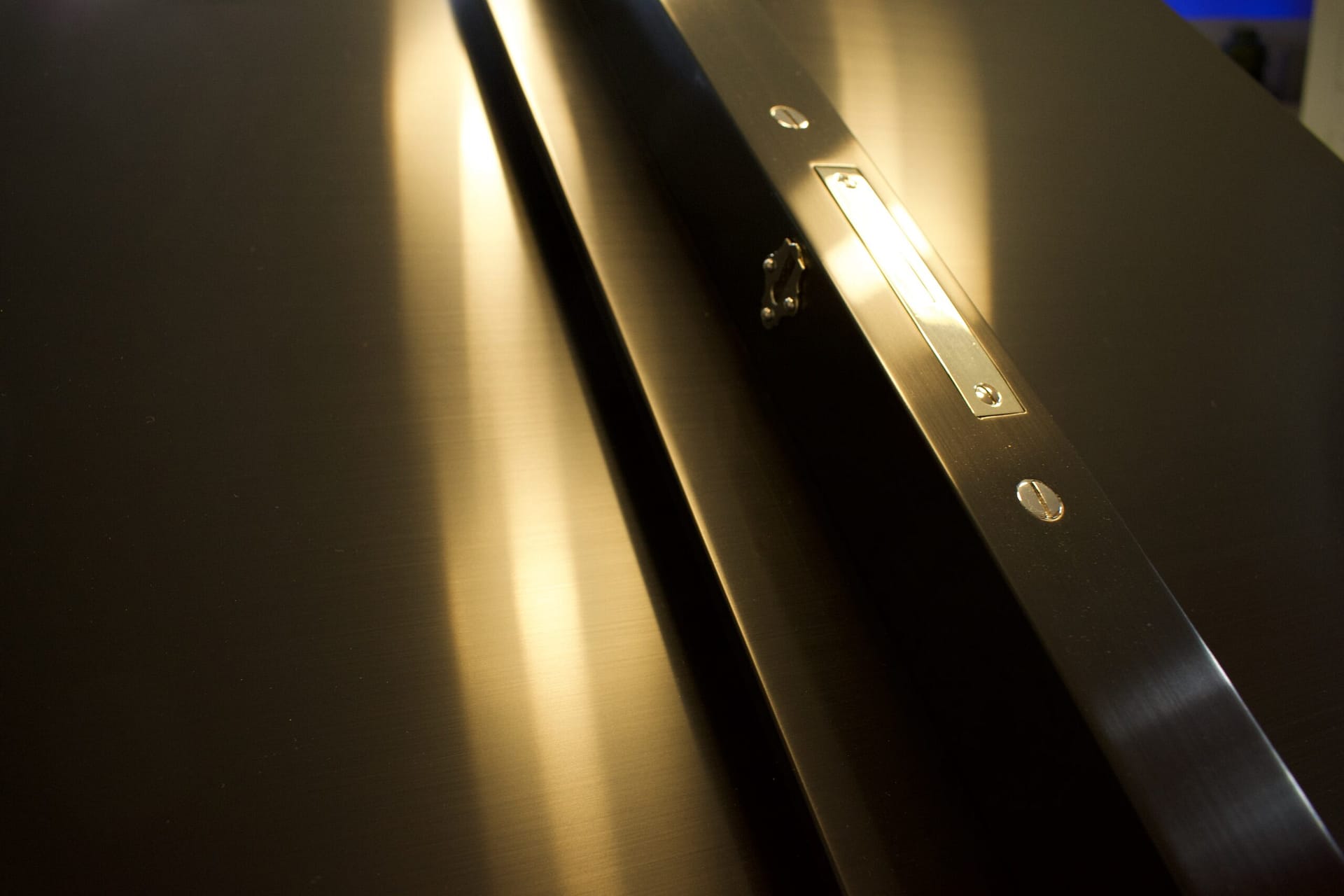
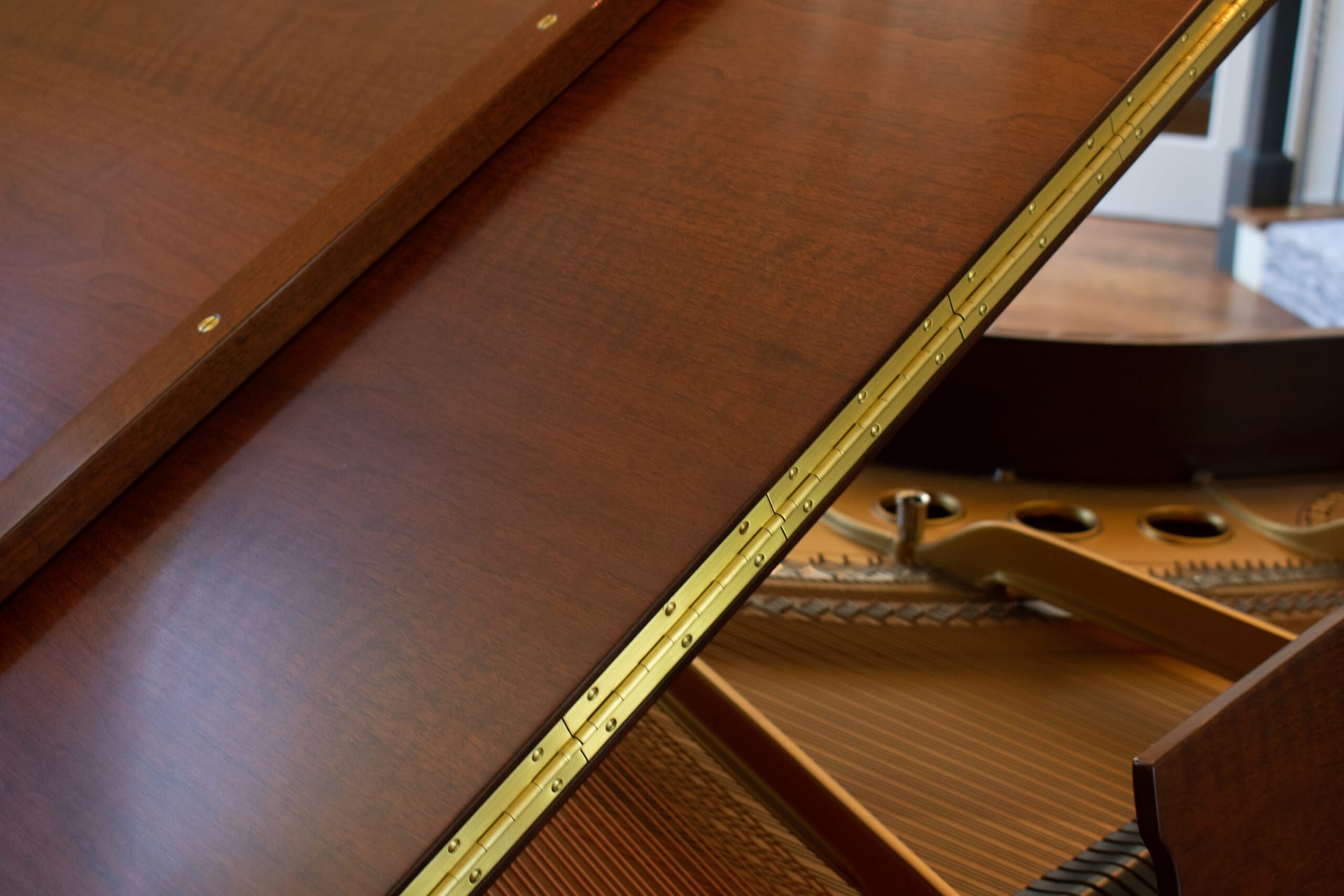
A closer look at our work
above: images of piano refinished by Bradfield Piano
Refinishing begins by removing the existing finish from the piano cabinet. Once the surface is exposed, the veneer is evaluated and repaired as needed. This may include addressing small dents, loose edges, or areas where the veneer has begun to lift.
After repairs are complete, the cabinet is carefully sanded and prepared for finishing. Color is then built gradually to achieve the desired tone and depth. The finish itself is applied in multiple coats, with drying and leveling between stages, to produce a durable and even surface rather than a thin cosmetic layer.
Depending on the scope of the project, refinishing may also include cleaning and polishing hardware, replacing decals, or addressing other exterior details. When replacement parts are required, appropriate originals or equivalents are sourced to suit the instrument.
FINAL THOUGHTS
Not every piano needs full restoration. Refinishing decisions are made instrument by instrument, based on condition, materials, and long-term use, not on presets or packages. Sometimes a thorough deep cleaning and polishing and finish touch-up can make a huge difference.
Our role is to recommend only what makes sense for the piano in front of us, and to execute that work to a standard that respects the instrument’s age and design.
Give us a call
and let’s talk.
Bradfield Piano Restoration, Moving and Storage, LLC